
Anxiety and worry are experiences that touch almost every human heart at some point in life. Whether it is fear about the future, grief over the past, or the everyday pressures of work, family, and health, the human soul often feels overwhelmed. Islam does not ignore this reality. The Quran speaks directly to the anxious heart, offering both comfort and a practical path toward peace. For centuries, Muslims have turned to these verses in moments of distress, finding reassurance in the knowledge that Allah is always near and always aware of what they are going through.
This article brings together some of the most meaningful Quran verses about anxiety and worry, along with their Arabic text, transliteration, and English translation. We will also explore authentic hadith that complement these verses, giving beginners and general readers a reliable, well-sourced starting point for understanding how the Quran addresses anxiety and depression. Wherever a popular saying lacks strong authentication, this will be noted honestly, in keeping with sound Islamic scholarship.
Why the Quran Speaks to the Anxious Heart
Anxiety is not a modern invention; it is a part of the human condition that the Quran acknowledges openly. The Quran was revealed to a community facing persecution, loss, and uncertainty, so its verses were never meant to describe an idealized life free of hardship. Instead, they were revealed to guide real people through real struggles. This is one reason the Quran remains so relatable today for anyone dealing with stress, fear, or sadness.
Allah does not simply tell believers that difficulty exists; He offers a framework for facing it. This framework includes remembrance of Allah, patience, prayer, and trust in divine wisdom. Scholars have long pointed to specific verses that directly address the heart’s unease, and these verses form the foundation of what many now call “Quranic verses for anxiety.” Understanding the context behind each verse helps readers apply them meaningfully rather than treating them as mere phrases to repeat.
Read More : theorbitquran.com
Surah Al-Baqarah 2:286 Allah Does Not Burden a Soul Beyond Its Capacity
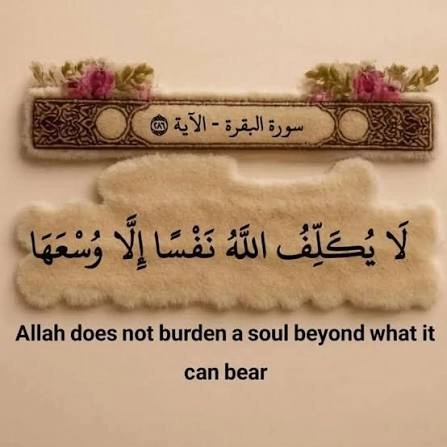
Arabic: لَا يُكَلِّفُ اللَّهُ نَفْسًا إِلَّا وُسْعَهَا
Transliteration: La yukallifullahu nafsan illa wus’aha
Translation: “Allah does not burden a soul beyond that it can bear.”
This verse is one of the most frequently cited when discussing anxiety in Islam, and for good reason. It reassures the believer that whatever trial they are facing, they have been given the inner capacity to endure it. Anxiety often stems from a fear of being unable to cope, and this verse directly counters that fear by affirming Allah’s perfect knowledge of each person’s limits. Reflecting on this verse can help shift the mind away from catastrophizing and toward trust in divine wisdom, recognizing that hardship is proportionate to one’s strength, even when it does not feel that way in the moment.
Surah Ash-Sharh 94:5-6 With Hardship Comes Ease
Arabic: فَإِنَّ مَعَ الْعُسْرِ يُسْرًا (٥) إِنَّ مَعَ الْعُسْرِ يُسْرًا (٦)
Transliteration: Fa inna ma’al ‘usri yusra, inna ma’al ‘usri yusra
Translation: “For indeed, with hardship comes ease. Indeed, with hardship comes ease.”
Revealed during a period when the Prophet Muhammad ﷺ faced intense emotional strain, this short but powerful passage repeats its message twice for emphasis. Many scholars of tafsir note that the repetition is meant to reassure the reader that relief is not a distant possibility but a near certainty tied to the hardship itself. For someone struggling with anxiety, this verse offers a shift in perspective: difficulty is not permanent, and ease is woven into the very fabric of trial. This verse is often recommended for daily reflection during periods of stress or uncertainty.
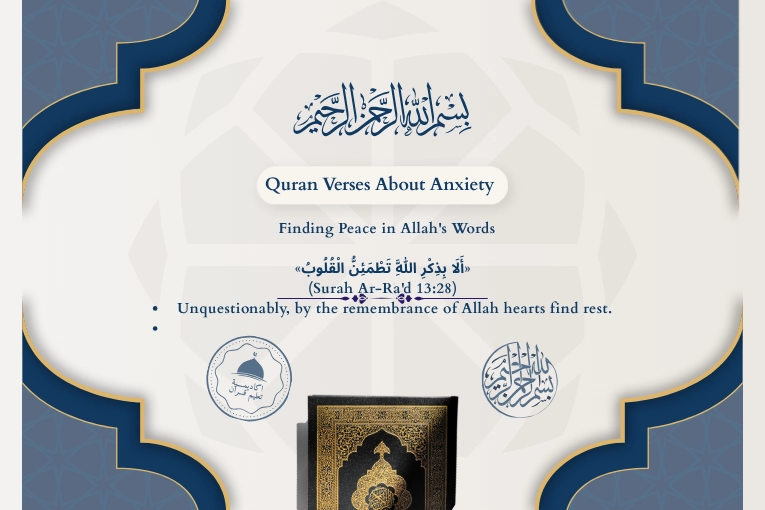
Surah Ar-Ra’d 13:28 Hearts Find Rest in Remembrance
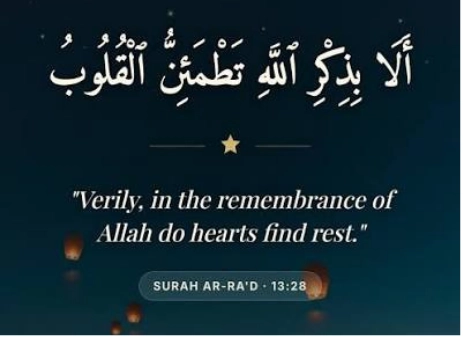
Arabic: أَلَا بِذِكْرِ اللَّهِ تَطْمَئِنُّ الْقُلُوبُ
Transliteration: Ala bidhikrillahi tatma’innul qulub
Translation: “Verily, in the remembrance of Allah do hearts find rest.”
This verse identifies the direct cause of inner peace: the remembrance of Allah, known as dhikr. Anxiety often involves a racing, restless mind, and this verse points to a specific remedy rooted in spiritual practice rather than avoidance. Regular dhikr, whether through saying “SubhanAllah,” “Alhamdulillah,” or reciting Quran, has been described by scholars as a means of calming the nervous heart. This is not a claim that dhikr replaces medical or psychological treatment when needed, but rather that it is a foundational spiritual practice the Quran itself recommends for tranquility.
Surah At-Talaq 65:2-3 A Way Out for Those Who Trust Allah
Arabic: وَمَن يَتَّقِ اللَّهَ يَجْعَل لَّهُ مَخْرَجًا وَيَرْزُقْهُ مِنْ حَيْثُ لَا يَحْتَسِبُ
Transliteration: Wa man yattaqillaha yaj’al lahu makhraja, wa yarzuqhu min haythu la yahtasib
Translation: “And whoever fears Allah, He will make for him a way out, and will provide for him from where he does not expect.”
Worry about finances, relationships, or unresolved problems is a common trigger for anxiety, and this verse speaks directly to that fear. It promises that mindfulness of Allah (taqwa) is paired with divine provision and solutions that may come from unexpected sources. This does not mean believers should abandon effort or planning; rather, it teaches reliance on Allah (tawakkul) alongside practical action. Many Muslims recite this verse during times of financial or personal difficulty as a reminder that outcomes are ultimately in Allah’s hands.
Surah Taha 20:25-26 The Dua of Prophet Musa for Relief
Arabic: رَبِّ اشْرَحْ لِي صَدْرِي وَيَسِّرْ لِي أَمْرِي
Transliteration: Rabbishrah li sadri wa yassir li amri
Translation: “My Lord, expand for me my chest, and ease for me my task.”
When Prophet Musa (AS) was commanded to confront Pharaoh, a daunting and fearful task, he turned to Allah with this heartfelt supplication. It is a powerful example of how even prophets experienced apprehension and responded not with despair but with prayer. This dua is widely recommended for anyone facing a stressful situation, whether an exam, a difficult conversation, or a major life decision. Its simplicity makes it easy to memorize and repeat, offering both linguistic beauty and deep emotional resonance for the anxious heart.
Surah Al-Imran 3:139 Do Not Grieve, You Will Be Superior
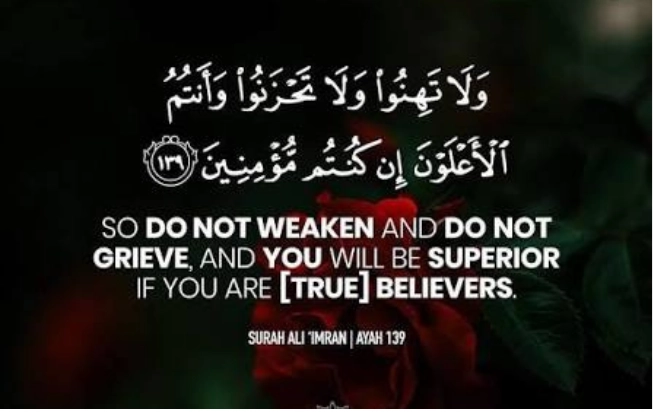
Arabic: وَلَا تَهِنُوا وَلَا تَحْزَنُوا وَأَنتُمُ الْأَعْلَوْنَ إِن كُنتُم مُّؤْمِنِينَ
Transliteration: Wa la tahinu wa la tahzanu wa antumul a’launa in kuntum mu’minin
Translation: “So do not weaken and do not grieve, for you will be superior if you are true believers.”
This verse was revealed after the Battle of Uhud, a moment of collective grief and setback for the early Muslim community. Its message is one of resilience: sorrow is natural, but it should not become paralyzing. Believers are encouraged to process grief without allowing it to define their identity or future. For readers dealing with anxiety rooted in past failures or losses, this verse offers a reminder that setbacks are not final and that faith provides a foundation for moving forward with renewed strength.
Authentic Hadith on Anxiety and Distress
Alongside the Quran, the Prophet Muhammad ﷺ taught specific supplications for times of anxiety. One well-documented dua is recorded in Sahih al-Bukhari, Hadith 6369, narrated by Anas ibn Malik, in which the Prophet ﷺ would say: “Allahumma inni a’udhu bika minal-hammi wal-hazan, wal-‘ajzi wal-kasal, wal-bukhli wal-jubn, wa dala’id-dayni wa ghalabatir-rijal” a supplication seeking refuge from anxiety, sorrow, weakness, and other burdens. This hadith is authentically graded and widely taught in Islamic circles as a comprehensive dua for emotional distress.
It is worth noting that many other sayings about anxiety circulate widely on social media without reliable chains of narration. Readers are encouraged to verify any hadith through established collections such as Sahih al-Bukhari, Sahih Muslim, or recognized hadith databases before accepting them as prophetic teaching. This blog is committed to citing only verified sources, and where popular claims cannot be authenticated, that will always be stated clearly rather than presented as established fact.
Practical Ways to Apply These Verses
Reading these verses is a meaningful first step, but applying them consistently is what brings lasting benefit. Many scholars recommend setting aside a few minutes each day, ideally after Fajr or before sleep, to recite and reflect on verses like Surah Ash-Sharh or the dua of Prophet Musa. Writing these verses down, understanding their context, and repeating them during moments of stress can help build a habit of turning to the Quran rather than to worry alone.
It is equally important to remember that the Quran encourages balance. Trusting Allah does not mean neglecting practical steps such as seeking medical help, talking to a trusted person, or making lifestyle changes that support mental wellbeing. Islam recognizes the value of both spiritual and practical remedies working together, and anyone experiencing persistent anxiety or depression should not hesitate to seek professional support alongside their faith practice.
Frequently Asked Questions
What does the Quran say about anxiety and depression? The Quran acknowledges that believers face grief, fear, and hardship, and it offers guidance through remembrance of Allah, patience, prayer, and specific verses such as Surah Ash-Sharh and Surah Ar-Ra’d that speak directly to emotional relief.
Which surah is best for anxiety? Surah Ash-Sharh (Al-Inshirah) is commonly recommended because of its direct message that ease accompanies hardship, but Surah Ar-Ra’d, Surah Taha, and Surah At-Talaq are also frequently cited for their reassurance during difficult times.
Is there a specific dua for anxiety in Islam? Yes, the Prophet Muhammad ﷺ taught a dua recorded in Sahih al-Bukhari (6369) seeking refuge from anxiety, sorrow, and related burdens, which many Muslims recite during times of distress.
Can reciting Quran actually reduce anxiety? Many Muslims report a sense of calm from reciting and reflecting on the Quran, and the Quran itself states that hearts find rest through the remembrance of Allah, though professional support should also be sought when needed.
Conclusion
Anxiety is a shared human experience, and the Quran meets it not with dismissal but with deep compassion and practical guidance. From the reassurance in Surah Al-Baqarah that no soul is burdened beyond its capacity, to the comforting repetition in Surah Ash-Sharh that ease follows hardship, these verses offer a spiritual anchor for anyone feeling overwhelmed. Paired with authentic prophetic supplications, they form a comprehensive source of comfort for believers navigating worry, fear, or sadness.
For beginners and general readers alike, the key takeaway is simple: turning to the Quran during moments of anxiety is not a sign of weakness but a practice rooted in centuries of faith and resilience. Alongside sincere prayer and remembrance, seeking support from trusted people and professionals when needed reflects the Quran’s own balanced approach to wellbeing.
Disclaimer: This article is intended for educational purposes and reflects general Islamic teachings on anxiety and worry as found in the Quran and authentic hadith. It is not a substitute for professional mental health or medical advice. Readers experiencing persistent anxiety or depression are encouraged to consult qualified religious scholars and licensed mental health professionals.