Introduction
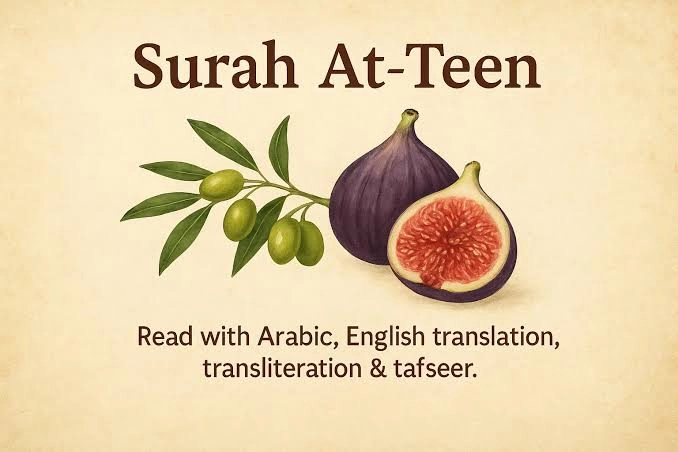
Surah Teen, also written as Surah At-Tin, is the 95th chapter of the Holy Quran. This short Makkan surah has only eight verses, yet it carries a profound message about human dignity, purpose, and accountability before Allah. Its name comes from the very first word, “At-Tin,” meaning “the fig,” which appears alongside the olive in a solemn opening oath.
Many beginners and students memorize Surah Teen early because of its short length and rhythmic style. Its meaning goes much deeper, though. Allah created humanity in the finest form, then warned against moral decline for those who abandon faith and righteous action. This article walks through the Arabic text, transliteration, English translation, authenticated Surah Teen benefits, and practical lessons for readers in the UK, USA, and Canada who want accurate, well-referenced Islamic content. You can also cross-check the full Arabic mushaf text and several certified translations on Quran.com.
What Is Surah Teen?
Allah revealed Surah Teen in Makkah, before the Prophet Muhammad (peace be upon him) migrated to Madinah. It holds the 95th position in the Quran and sits within the 30th juz (Juz Amma), a section packed with short chapters that Muslims recite frequently in daily prayers. The surah itself runs just eight verses long.
Human creation forms the central theme of Surah Teen. Allah made the human being in “the best of stature,” then contrasted that noble creation with the risk of moral and spiritual decline for those who reject faith and good deeds. A rhetorical question closes the surah, affirming that Allah is the most just of all judges and reminding the reader that accountability in the Hereafter is certain. Teachers often introduce Surah Teen early because it captures both human purpose and divine justice in just a few lines.
Surah Teen Arabic Text, Transliteration, and English Translation
Here is the complete text of Surah Teen with Arabic script, transliteration, and English translation for each verse.
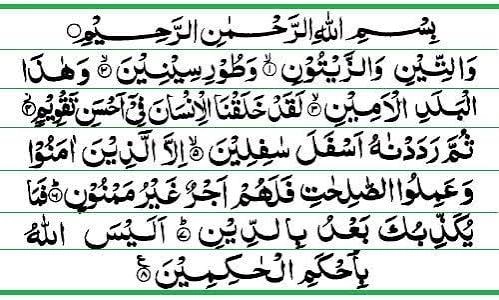
Verse 1 وَالتِّينِ وَالزَّيْتُونِ Wat-tini waz-zaytun “By the fig and the olive,”
Verse 2 وَطُورِ سِينِينَ Wa turi seeneen “And [by] Mount Sinai,”
Verse 3 وَهَٰذَا الْبَلَدِ الْأَمِينِ Wa haadhal baladil ameen “And [by] this secure city [Makkah],”
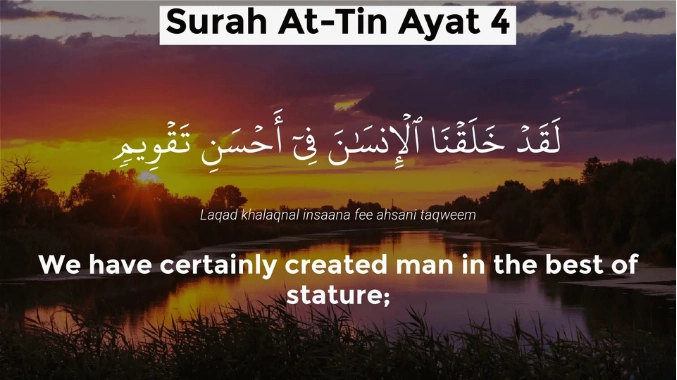
Verse 4 لَقَدْ خَلَقْنَا الْإِنسَانَ فِي أَحْسَنِ تَقْوِيمٍ Laqad khalaqnal-insana fee ahsani taqweem “We have certainly created man in the best of stature;”
Verse 5 ثُمَّ رَدَدْنَاهُ أَسْفَلَ سَافِلِينَ Thumma radadnaahu asfala saafileen “Then We return him to the lowest of the low,”
Verse 6 إِلَّا الَّذِينَ آمَنُوا وَعَمِلُوا الصَّالِحَاتِ فَلَهُمْ أَجْرٌ غَيْرُ مَمْنُونٍ Illal-ladheena aamanoo wa ‘amilus-saalihaati falahum ajrun ghayru mamnoon “Except for those who believe and do righteous deeds, for they will have a reward uninterrupted.”
Verse 7 فَمَا يُكَذِّبُكَ بَعْدُ بِالدِّينِ Fa maa yukadhdhibuka ba’du bid-deen “So what yet causes you to deny the Recompense?”
Verse 8 أَلَيْسَ اللَّهُ بِأَحْكَمِ الْحَاكِمِينَ Alaysal-laahu bi ahkamil-haakimeen “Is not Allah the most just of judges?”
Meaning and Tafsir of Surah Teen
Allah opens the surah by swearing by four significant things: the fig, the olive, Mount Sinai, and the city of Makkah. Scholars of tafsir, including Ibn Kathir, link these oaths to lands associated with major prophets. The fig and olive point to the region of Jerusalem and the Prophet Isa (Jesus). Mount Sinai points to the Prophet Musa (Moses). The secure city refers to Makkah, birthplace of the Prophet Muhammad (peace be upon him). Together, these oaths connect Surah Teen to a lineage of prophetic guidance across different eras.
Verse four then declares that Allah created the human being “in the best of stature” (ahsani taqweem). Scholars read this phrase as pointing to both a balanced physical form and the intellectual and spiritual capacity unique to humankind. This honour, however, comes with a condition. Verse five warns that a person can fall to “the lowest of the low” through disbelief and neglect of righteous conduct. Verse six then offers the exception: believers who do good deeds receive a reward that never ends. The final verses affirm the certainty of divine judgement. For a deeper classical commentary, see Ibn Kathir’s tafsir on Surah At-Tin.
Surah Teen Benefits: What Is Authentically Established
Many websites list extensive “benefits” for reciting Surah Teen, including claims about curing illnesses or guaranteeing specific worldly outcomes. None of these specific claims appear in authentic hadith collections, so readers should treat them with caution rather than accept them as established fact. The section below covers only what reliable sources document about Surah Teen benefits.
Prayer recitation stands out as the clearest and most authentic virtue tied to Surah Teen. The Prophet Muhammad (peace be upon him) recited it regularly, and Al-Bara bin Azib (may Allah be pleased with him) reported hearing him recite it during Isha prayer, adding that he had never heard a more beautiful voice or recitation. Scholars record this narration in Sahih al-Bukhari, Hadith 767, and Sahih Muslim, Hadith 464. A separate narration places this event during a journey, when the Prophet recited the surah in one of the first two rak’ahs of Isha, as recorded in Sahih al-Bukhari, Hadith 769.
Beyond this authentic practice, the real benefit of Surah Teen lies in its message. Reflecting on human dignity, striving for righteous deeds, and internalising belief in the Day of Judgement matter more than repeating a fixed ritual formula. The Quran and Sunnah support reciting it with understanding, not for a promised worldly outcome.
When and How to Recite Surah Teen
You can recite Surah Teen in any of the five daily prayers, just like other short surahs from Juz Amma. Many people choose it soon after memorising the shorter chapters of the Quran. The authentic narration from Al-Bara bin Azib specifically ties its recitation to Isha prayer, which makes it a meaningful choice for that particular salah.
Outside formal prayer, you can recite Surah Teen during personal Quran sessions, especially while building familiarity with Juz Amma. Teachers also favour it for children and new Quran learners because its short length and clear structure make correct pronunciation easier to grasp alongside the surah’s central message about human purpose. No specific rule restricts its timing. You may recite it at any point during the day, alongside daily adhkar, or during personal reflection, as long as you approach it with sincerity and a genuine intention to understand its meaning. Our complete guide to learning the Quran offers a structured memorization approach for new learners working through Juz Amma.
Lessons From Surah Teen for Daily Life
Surah Teen offers several practical lessons for daily life. First, it reminds every believer of their dignity: Allah created each person in an elevated form, physically and spiritually, which calls for gratitude and self-respect rather than self-neglect. Second, it warns against decline, making clear that this honourable status is not guaranteed permanently and can be lost through disbelief and abandonment of good conduct.
A third lesson centres on the exception given to believers who combine faith with righteous action. This pairing of belief and deeds runs throughout the Quran, and Surah Teen reinforces it directly. Finally, the surah affirms the certainty of divine justice, closing with a question that leaves no room for doubt about Allah’s fairness in judgement. These four lessons encourage ongoing self-examination: do daily choices move toward the “best of stature” promised at creation, or away from it? That reflection makes Surah Teen valuable well beyond memorization. If you want to strengthen daily worship further, our guide to dua for anxiety and depression pairs well with these reflective themes.
FAQs About Surah Teen
What does Surah Teen mean? Surah Teen means “The Fig,” named after the first word of the surah, which opens with an oath by the fig and the olive.
How many verses does Surah Teen have? Surah Teen has eight verses and is one of the shorter Makkan surahs found in the 30th juz of the Quran.
Is Surah Teen Makkan or Madani? Surah Teen is a Makkan surah, revealed before the Prophet Muhammad’s (peace be upon him) migration to Madinah.
What is the main message of Surah Teen? Its main message is that Allah created humans in the best form, but only those who believe and do righteous deeds retain that honour and receive an unending reward.
Is there an authentic hadith about reciting Surah Teen? Yes. Al-Bara bin Azib reported hearing the Prophet recite it during Isha prayer, as recorded in Sahih al-Bukhari (767) and Sahih Muslim (464).
Conclusion
Surah Teen is a short but powerful chapter of the Quran that speaks directly to the purpose and potential of every human being. Its opening oaths connect the surah to the legacy of earlier prophets, while its central verses remind readers that the honour of creation comes with responsibility. Believers are best served by reflecting on its authentic message and the confirmed sunnah of reciting it in Isha prayer, rather than chasing exaggerated or unverified claims about Surah Teen benefits. For beginners, students, and anyone building a stronger connection with the Quran, Surah Teen offers a concise yet meaningful reminder of faith, righteous action, and the certainty of divine justice.
Disclaimer: This article is intended for general educational purposes. Quranic translations and hadith references have been sourced with care, but readers are encouraged to consult a qualified Islamic scholar for matters of religious rulings, personal worship, or specific guidance. Any narrations not attributed to an authenticated source should not be treated as established Islamic teaching.