
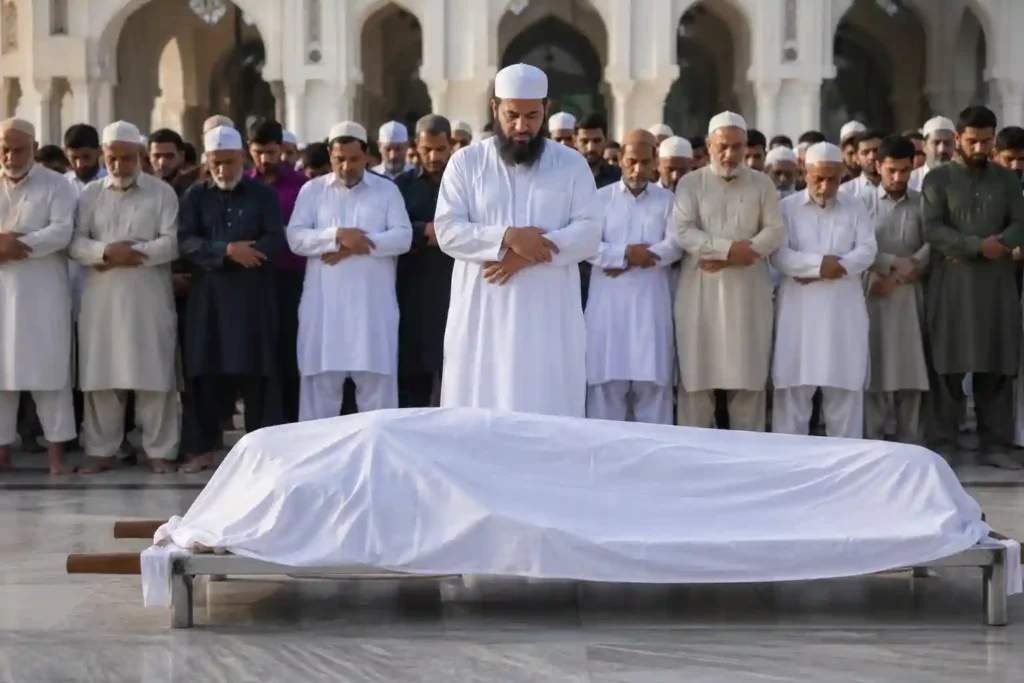
Namaz e Janaza is the funeral prayer offered by Muslims for a deceased believer before burial. Unlike the five daily prayers, this prayer has no ruku (bowing) or sujood (prostration); it consists entirely of standing and four takbeers, accompanied by specific duas. It is classified as Fard Kifayah, meaning if a sufficient number of people from the community perform it, the obligation is lifted from everyone else but if no one performs it, the entire community is considered sinful. For parents and students learning about Islamic rituals, understanding this prayer isn’t just about memorizing steps; it’s about learning how Islam honors the dead and comforts the living. This guide walks through its meaning, method, and etiquette in detail.
What Is Namaz e Janaza and Why It Matters
The funeral prayer is one of the final acts of kindness a community offers a deceased Muslim. It carries no physical bowing or prostration because, according to many scholars, it is essentially a collective dua a plea for Allah’s mercy and forgiveness on behalf of the person who has passed away.
This prayer reflects a core Islamic value: the living have a responsibility toward the dead. Washing the body, wrapping it in a kafan (burial shroud), praying over it, and burying it promptly are all part of fulfilling this responsibility. Skipping or delaying this prayer without valid reason is discouraged, since it’s considered a right the deceased holds over the living community.
For children and new students of Islam, learning about Namaz e Janaza also teaches an important lesson about mortality, community responsibility, and the balance between grief and worship.
Conditions and Rulings Before the Prayer
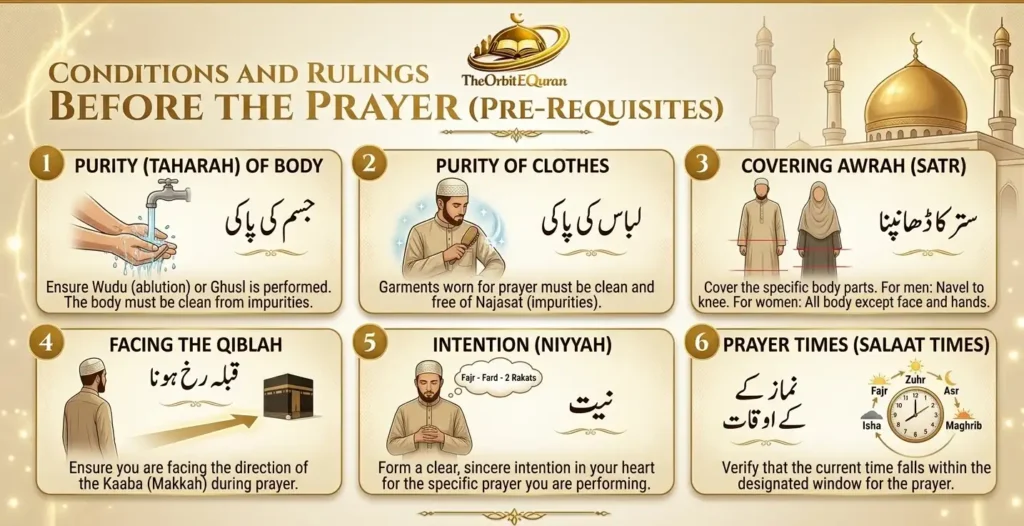
Before performing the funeral prayer, a few conditions must be met. The body must be washed (ghusl) and shrouded according to Islamic guidelines. It should then be placed in front of the praying congregation, with the deceased’s head typically positioned toward the right side of the row (in most schools of thought, facing the Qibla direction similarly to how the body is buried).
The prayer is performed standing only there is no sitting, bowing, or prostrating throughout. It can be offered individually, but praying in congregation (jama’ah) is strongly preferred, as more participants means more collective dua for the deceased.
There’s also flexibility built into the ruling. If the actual body isn’t present for example, in the case of a Muslim who passed away far from home a version called Salat-ul-Ghaib (funeral prayer in absentia) may be performed instead.
Read More : The Virtue of Reciting the Last Two Ayat

Step-by-Step Method of Namaz e Janaza
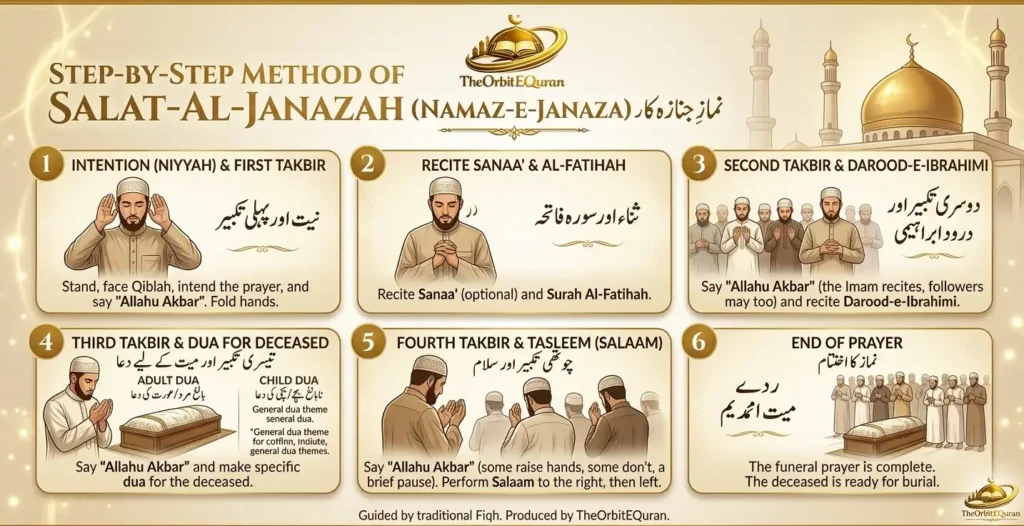
Performing this prayer correctly involves four takbeers, each followed by a specific recitation. Here’s a simple breakdown:
1. First Takbeer
Raise both hands to the ears, say “Allahu Akbar,” then fold the hands below the navel (or on the chest, depending on your school of thought). After this, recite Surah Al-Fatiha silently, or in some views, a shorter dua of praise instead of Al-Fatiha, depending on the specific fiqh followed.
2. Second Takbeer
Say “Allahu Akbar” without raising the hands this time. Then recite Durood Ibrahim — the same blessings sent upon the Prophet Muhammad ﷺ that are recited in the final sitting of the five daily prayers.
3. Third Takbeer
Say “Allahu Akbar” again, and recite a dua specifically for the deceased. A commonly recited dua asks Allah to forgive the deceased, have mercy on them, and grant them ease in the grave and the Hereafter. If the deceased is a child, a different, simpler dua is typically recited instead, asking that the child become a means of reward for the parents.
4. Fourth Takbeer
Say “Allahu Akbar” one final time, then turn the head to the right and left, saying “Assalamu Alaikum wa Rahmatullah” the same salam that concludes the daily prayers.
This structure is what distinguishes the funeral prayer from every other prayer in Islam no physical movement beyond standing, yet spiritually one of the most meaningful acts a Muslim can perform for another.
Common Mistakes to Avoid During Namaz e Janaza
Because this prayer is offered less frequently than the five daily prayers, many people feel unsure about the steps. A few common mistakes are worth mentioning.
- Rushing through the takbeers. Each takbeer should be said clearly, with a brief pause for recitation before the next one.
- Forgetting the correct dua for children. Reciting the adult dua for a deceased child (or vice versa) is a frequent error that’s easy to avoid with a little preparation.
- Standing in the wrong row position. Latecomers sometimes join incorrectly; if you arrive after a takbeer has already been said, simply follow along and catch up with the missed takbeer(s) after the imam completes the prayer, rather than trying to say it out of sequence.
- Talking or looking distracted. Since there’s no bowing or prostration, some worshippers mistakenly treat this prayer more casually. It deserves the same focus and humility as any other prayer.
Learning these details in a structured setting rather than only during moments of grief helps students perform the prayer with confidence when it matters most.
The Spiritual Wisdom Behind the Funeral Prayer
Beyond the mechanics, there’s deep wisdom in how this prayer is structured. The absence of ruku and sujood reflects the idea that the deceased is beyond the stage of physical worship; the prayer becomes purely a dua of intercession from the living.
It’s also worth noting that the reward for attending a funeral and its prayer is significant in Islamic teaching. The Prophet ﷺ mentioned that those who attend the funeral until the prayer is completed, and then stay until burial, earn a substantial reward likened to two mountains of good deeds. This encourages Muslims not to see funerals as an obligation to avoid, but as an opportunity to support a grieving family and earn spiritual reward simultaneously.
For students studying Islamic jurisprudence more broadly, Namaz e Janaza offers a practical case study in how rulings can differ slightly between schools of thought (madhabs) while still preserving the same core structure and intent.
Read More : Noorani Qaida
Frequently Asked Questions About Namaz e Janaza
Can women perform Namaz e Janaza?
Yes, women are permitted to perform the funeral prayer, though practices vary by region and school of thought regarding whether they join the main congregation or pray separately.
What happens if I miss the funeral prayer?
If you arrive after the prayer has already concluded, you generally cannot make it up individually in the same way, since it’s tied to the presence of the body. However, if the burial hasn’t happened yet, some scholars allow a makeup prayer at the graveside.
Is Namaz e Janaza obligatory on every Muslim?
It falls under Fard Kifayah, meaning it becomes obligatory on the community as a whole, not on each individual. If enough people perform it, the responsibility is fulfilled for everyone else.
Can this prayer be delayed?
It’s discouraged to delay burial and the accompanying prayer without a valid reason, such as waiting for a close family member to arrive from a distance, or completing necessary legal or medical procedures.
Final Thoughts on Namaz e Janaza
Namaz e Janaza is a unique act of worship simple in structure, yet deeply meaningful in what it represents. It’s the community’s final gesture of mercy and dua for someone who has passed on, and a reminder to the living of their own mortality and purpose.
Learning the correct steps, duas, and etiquette isn’t just about ritual accuracy; it’s about being prepared to fulfill a right owed to fellow Muslims when the moment arrives. Whether you’re a parent guiding your children through Islamic education or a student deepening your own knowledge, understanding this prayer connects you to one of the most compassionate traditions in Islam.