The Complete Guide to the Dua for New Month in Islam
Every month, Muslims around the world look to the sky to sight the new crescent moon, a moment that marks not just the passing of time, but a fresh opportunity for blessing, forgiveness, and closeness to Allah. Welcoming a new month of Islam or greeting someone with a happy new month in Islamic way starts with turning to Allah through a new month dua, a beautiful supplication taught by Prophet Muhammad ﷺ himself.
Whether you are looking for a new Islamic month dua, trying to memorize the dua for new Islamic month, or simply want to understand the dua for new month in Islam (often searched as new month ki dua or new Islamic month ki dua), this guide covers everything you need. You will find the authentic text in Arabic, the new month dua in English, transliteration, the Hadith and Quranic backing behind it, and practical tips on how and when to recite it wherever you are in the UK, USA, or Canada. If you have ever wondered what to say as a dua for a new month, or which prayer for new month in Islam is authentic, you are in the right place.
Why Does the New Month Matter in Islam?
The Islamic calendar is a lunar calendar, and each Islamic new month begins with the sighting of the crescent moon (hilal), rather than a fixed date on a solar system like the Gregorian calendar most of us use day to day. This means entering a new month of Islam is, quite literally, tied to a visible sign in the sky. Allah refers to the moon’s phases directly in the Quran:
“They ask you about the new moons. Say, ‘They are measurements of time for the people and for Hajj.'” (Surah Al-Baqarah, 2:189)
This verse tells us that the changing moon isn’t just a natural phenomenon, it’s a divinely designed system that helps regulate worship, from the timing of Ramadan to Hajj and Eid. Because each new month represents a fresh marker in this system, reciting a new month dua in Islam becomes a meaningful moment to pause, reflect, and turn to Allah in prayer.
For Muslims living in Western countries, this lunar rhythm can sometimes feel disconnected from the Gregorian calendar that structures work, school, and daily life. That’s exactly why reviving small Sunnahs like the new month Islamic dua matters: it’s a simple, low-effort way to stay spiritually connected throughout the year.
The Authentic New Month Dua (Arabic, Transliteration & Translation)
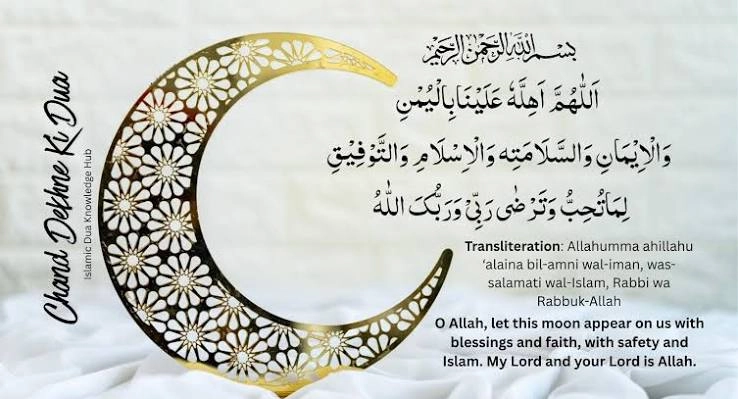
The most well-known and authentic Islamic new month dua comes from a hadith narrated by Talha ibn Ubaydullah (may Allah be pleased with him), who said that whenever the Prophet ﷺ saw the new crescent moon, he would recite this dua for new month in Arabic:
Arabic:
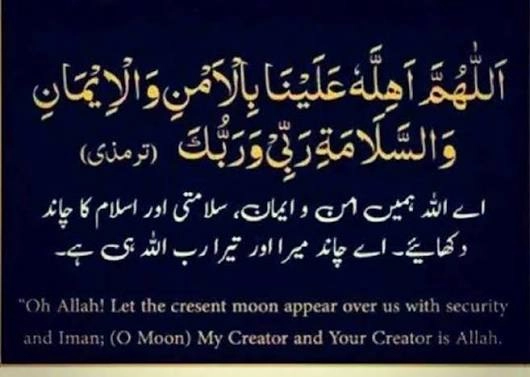
اللَّهُمَّ أَهِلَّهُ عَلَيْنَا بِالْأَمْنِ وَالْإِيمَانِ، وَالسَّلَامَةِ وَالْإِسْلَامِ، رَبِّي وَرَبُّكَ اللَّهُ
Transliteration:
Allahumma ahillahu ‘alayna bil-amni wal-iman, was-salamati wal-Islam, Rabbi wa Rabbuka Allah.
New Month Dua in English (Translation)
“O Allah, bring it (the new moon) upon us with security and faith, safety and Islam. My Lord and your Lord is Allah.”
This supplication is recorded in Jami’ at-Tirmidhi (Hadith 3451), where it is classified as hasan gharib (a good, authentic narration). It is one of the most frequently cited supplications among scholars and is widely recommended whenever a dua for new month is needed by Muslims across all schools of thought.
Read More : Home
A New Month Prayer for Yourself, in the Islamic Way
Beyond the Prophetic new moon dua, many Muslims also like to say a personal new month prayer for myself in the Islamic way, a few sincere words asking Allah for ease, protection, and goodness in the weeks ahead. There’s no fixed formula for this; after reciting the authentic dua, you can simply raise your hands and ask Allah, in your own words, for whatever is on your heart: better health, patience, provision, or guidance in a decision you’re facing. This personal reflection is very much part of practising a new month prayer in the Islamic way, where dua isn’t just ritual, but an honest conversation with your Lord.
Prayer for New Month in Islam: What Is Authentic?
When people search for a prayer for new month in Islam, they are usually asking for the Prophetic dua above. Islam does not prescribe a special congregational salah for the start of a month, so the authentic “prayer” is the short supplication taught by the Prophet ﷺ, followed by your own personal dua if you wish.
Happy New Month in the Islamic Way
It’s also worth remembering that saying “Happy New Month” in the Islamic way looks a little different from a typical greeting. Rather than wishing someone luck or good fortune in a general sense, Muslims often greet one another with a short dua instead, something like “May Allah make this month full of khair (goodness) for you” or simply sharing the Prophetic new moon dua together. It’s a small shift, but a meaningful one: turning a casual greeting into a moment of shared worship and good intention for the month ahead.
Happy New Month in Arabic
If you’d like to say happy new month in Arabic, there are a few warm and commonly used greetings:
- شهر مبارك (Shahr Mubarak): “Blessed month,” a simple greeting for the start of any Islamic month.
- كل عام وأنتم بخير (Kullu ‘am wa antum bikhair): “May you be well every year,” a general greeting used on happy occasions.
- أهلّه الله علينا وعليكم بالخير والبركة (Ahallahu Allahu ‘alayna wa ‘alaykum bil-khayri wal-barakah): “May Allah bring this month upon us and you with goodness and blessing.”
Any of these can be sent in a message or said in person, ideally alongside the Prophetic dua.
Breaking Down the Meaning
This short dua carries a powerful message. Let’s look at what each part is really asking of Allah:
- “Bring it upon us with security”: a request for peace and safety in the coming month, free from harm, fear, or hardship.
- “and faith”: asking Allah to strengthen and protect our iman (belief) throughout the month.
- “safety and Islam”: a request to remain firm and steadfast upon the deen (religion) of Islam.
- “My Lord and your Lord is Allah”: a declaration addressed to the moon itself, affirming that even the moon, like us, is a creation under the total authority of Allah, a beautiful reminder of Tawheed (the Oneness of God).
What makes this dua so striking is its structure. Rather than simply asking for personal blessings, the Prophet ﷺ modelled a dua that first affirms who is truly in control, Allah alone, before making any request. It’s a short lesson in humility: even something as vast and constant as the moon is entirely subject to Allah’s command, and so are we. Reciting this dua regularly can gently reshape the way we view the passing of time itself, not as something to fear or rush through, but as something to hand over to Allah with trust.
When Should You Recite the New Month Dua?
The Sunnah is to recite this dua as soon as you sight the new crescent moon, which typically appears in the western sky shortly after sunset on the first day of the Islamic month. A few practical notes:
- You don’t need to physically see the moon with your own eyes in every case. Many Muslims today rely on moon-sighting announcements from local mosques, Islamic centres, or national bodies (such as moon-sighting committees in the UK, USA, and Canada).
- Say it upon hearing or seeing confirmation that the new month has begun, facing the direction of the moon if it’s visible.
- It can be recited individually or in a small gathering. There’s no requirement for a group setting.
This is a simple, few-second act, but it’s an easy Sunnah to revive that connects you to the Prophet’s ﷺ own habits.
Read More : Sehri Ki Dua: Complete Guide, Meaning, Supplications, and Fasting Rules
Is There a Specific Dua for Special Months?
While the general new month dua above applies to every Islamic month, some months carry additional significance and their own recommended supplications. If you are looking for a dua for new Islamic month beyond the general one, these are the main ones to know:
- Rajab and Sha’ban: The Prophet ﷺ is reported to have said: “O Allah, bless us in Rajab and Sha’ban, and let us reach Ramadan.” (Reported in Musnad Ahmad, with some scholars discussing its chain of narration.) This is commonly recited by Muslims anticipating the arrival of Ramadan.
- Ramadan: Along with the general new month dua, many Muslims increase their dua and repentance specifically upon the sighting of the Ramadan moon, given the month’s immense virtue.
- Dhul Hijjah: The first ten days of this month are considered among the most beloved days to Allah, and Muslims are encouraged to increase dhikr, dua, and good deeds from the very start of the month.
If you’re looking specifically for the general, all-purpose new month dua in Islam, the Tirmidhi narration above is the one to memorise and rely on.
The Deeper Wisdom Behind Making Dua at the Start of a Month
Making dua for new month isn’t just ritual, it reflects a mindset the Quran and Sunnah consistently encourage: gratitude for time, and humility in the face of the unknown.
Allah says in the Quran:
“And it is He who created the night and the day and the sun and the moon; each in an orbit swimming.” (Surah Al-Anbiya, 21:33)
Every new month is a sign of Allah’s precise control over the universe, and a reminder that our own lives are similarly measured out. Reciting the new month dua is a moment to:
- Reset your intentions for the weeks ahead.
- Ask for protection from the trials the month may bring.
- Express gratitude for having reached this point in time.
- Renew your commitment to faith and good deeds.
For Muslims living in the UK, USA, and Canada, often balancing work, study, and family life far from the rhythms of a Muslim-majority country, this small monthly ritual can serve as a grounding spiritual checkpoint, a moment to pause amid a busy Western calendar and reconnect with the Islamic one.
How to Make This Dua a Regular Habit
Reviving this Sunnah doesn’t require much effort. Here are a few simple ways to build it into your routine:
- Set a moon phase reminder on your phone or Islamic app so you know when a new Islamic month begins.
- Follow your local mosque or Islamic centre for moon-sighting announcements (many UK, US, and Canadian mosques post these on social media or their websites).
- Write the dua down or save it somewhere accessible, such as a notes app, a small card, or a bookmark in your dua book, so you’re not caught without it.
- Say it with your family, especially children, to teach them this beautiful Sunnah from a young age.
- Pair it with reflection: take a few extra minutes to consider your goals and intentions for the new month.
Common Questions About the New Month Dua
What is the dua for a new month in Islam? The authentic dua is “Allahumma ahillahu ‘alayna bil-amni wal-iman, was-salamati wal-Islam, Rabbi wa Rabbuka Allah,” narrated in Jami’ at-Tirmidhi. It is the dua for new month recited upon sighting the crescent.
Do I have to see the moon myself to say the dua? No. While it’s recommended to say it upon sighting the moon, many scholars note that reciting it upon learning that the new month has begun (through reliable announcement) is also acceptable and beneficial.
Can women recite this dua too? Yes, absolutely. This dua is for every Muslim: men, women, and children alike.
Is this dua only for Ramadan? No. It applies to the start of every Islamic month, though it holds special weight for months like Ramadan and Dhul Hijjah due to their unique virtues.
What if I miss the exact moment of moonsighting? There’s no harm in reciting the dua a little later once you become aware the new month has started. The key is sincerity, not perfect timing.
Is it a sin to forget to say the dua? No, this is a recommended Sunnah (mustahabb), not an obligation (fard). Missing it carries no sin, but consistently practising it brings extra reward and helps keep you connected to the Prophet’s ﷺ example.
Are there other duas I can add after the new month dua? Yes. Many Muslims follow the new month dua with personal supplications for the month ahead, such as asking for ease in provision, protection for family, guidance in worship, or forgiveness for past shortcomings. The Prophetic dua sets the tone, and you’re free to continue with dua in your own words afterward.
Final Thoughts
The new month dua is a small but profound Sunnah: just a few words, yet packed with meaning, a plea for safety, an affirmation of faith, and a declaration of Allah’s oneness. In a world that moves fast, pausing at the start of each Islamic month to say this dua is a gentle, consistent way to stay spiritually anchored.
Whether you’re marking the start of Muharram, welcoming Ramadan, or simply noting the passage of another month, let this dua become part of your monthly rhythm, a reminder that every new beginning is, ultimately, in the hands of Allah.
Disclaimer: This article is intended for general Islamic educational purposes. For matters of personal religious practice or specific fiqh rulings, please consult a qualified local scholar or imam.
Contact Us : Contact Us