
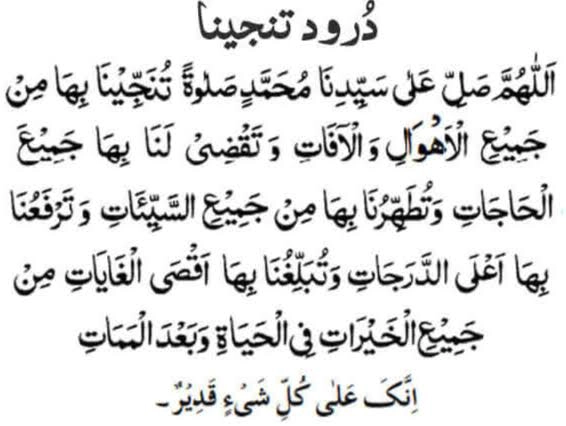
Darood Tanjeena, also known as Salat al-Tanjeena or Salawat al-Munjiyah, is one of the most widely recited salutations upon Prophet Muhammad ﷺ across Muslim communities in the UK, USA, and Canada. Many people turn to it during times of hardship, illness, financial stress, or family difficulty, hoping for relief and ease. Its popularity has grown through generations of oral tradition, mosque gatherings, and now social media, where it is frequently shared as a solution for problems of every kind.
Before exploring its reported benefits, it is important for readers especially beginners just learning about Islamic supplications to understand where this prayer comes from, what has been said about it historically, and how scholars view its status. This article presents the Arabic text, transliteration, translation, the story behind it, its reported virtues, and an honest look at its authenticity, so that readers in the UK, USA, and Canada can approach it with correct understanding rather than assumption.
What Is Darood Tanjeena? Arabic Text, Transliteration, and Translation
The most commonly circulated version of Darood Tanjeena reads as follows:
Arabic: اللَّهُمَّ صَلِّ عَلَى سَيِّدِنَا مُحَمَّدٍ صَلَاةً تُنْجِينَا بِهَا مِنْ جَمِيعِ الْأَهْوَالِ وَالْآفَاتِ، وَتَقْضِي لَنَا بِهَا جَمِيعَ الْحَاجَاتِ، وَتُطَهِّرُنَا بِهَا مِنْ جَمِيعِ السَّيِّئَاتِ، وَتَرْفَعُنَا بِهَا عِنْدَكَ أَعْلَى الدَّرَجَاتِ، وَتُبَلِّغُنَا بِهَا أَقْصَى الْغَايَاتِ مِنْ جَمِيعِ الْخَيْرَاتِ فِي الْحَيَاةِ وَبَعْدَ الْمَمَاتِ، إِنَّهُ سَمِيعٌ قَرِيبٌ مُجِيبُ الدَّعَوَاتِ، وَقَاضِي الْحَاجَاتِ، وَعَلَى آلِهِ وَصَحْبِهِ وَسَلِّمْ.
Transliteration: Allahumma salli ‘ala Sayyidina Muhammadin salatan tunjina biha min jami’il-ahwali wal-afaat, wa taqdi lana biha jami’al-hajaat, wa tutahhiruna biha min jami’is-sayyi’aat, wa tarfa’una biha ‘indaka a’lad-darajaat, wa tuballighuna biha aqsal-ghayaat, min jami’il-khayraati fil-hayati wa ba’dal-mamaat. Innahu Sami’un Qaribun Mujibud-da’awaat, wa Qadil-hajaat, wa ‘ala aalihi wa sahbihi wa sallim.
Translation: “O Allah, send blessings upon our master Muhammad, blessings by which You save us from all terrors and calamities, fulfil for us all our needs, purify us from all sins, raise us in status to the highest ranks in Your sight, and grant us the furthest limits of all good in this life and after death. Indeed, He is All-Hearing, Near, Answerer of prayers, and Fulfiller of needs. And send blessings upon his family and companions.”
The Origin Story Behind Darood Tanjeena
The narrative behind this prayer traces back to a scholar named Shaykh Musa al-Darir. According to accounts preserved in later Islamic literature, including Fajr al-Munir by Shaykh Umar ibn Ali al-Fakahani, Shaykh Musa was travelling by sea when his ship was caught in a violent storm referred to as al-Iqlabiyya (“the Capsizer”). With the vessel close to sinking and passengers losing hope, he fell into a light sleep and saw the Prophet ﷺ in a dream. He was instructed to have the passengers recite this specific salutation, and tradition holds that the storm calmed before they even completed a full thousand recitations.
This is a moving story, and it explains why the prayer became associated with relief from danger and hardship. However, a dream narrative of this kind is fundamentally different from a hadith transmitted through a verified chain of narrators back to the Prophet ﷺ, and readers should understand this distinction clearly before treating the story as religious proof.
Read More : Surah Kausar Meaning in English

Is Darood Tanjeena Found in Hadith? An Honest Look
This is where transparency matters most. The specific wording of Darood Tanjeena is not found in any of the six major authentic hadith collections (the Sihah Sittah Sahih al-Bukhari, Sahih Muslim, Sunan Abu Dawood, Jami’ at-Tirmidhi, Sunan an-Nasa’i, and Sunan Ibn Majah). It does not appear in any established statement of the Prophet ﷺ or his companions. Its origin, as described above, is a dream account recorded by later scholars not a hadith with a chain of narration (isnad) that hadith scholars can verify.
Scholarly opinion on this is divided. Some, such as Darul Ifta Birmingham (Hanafi), have stated that since this Darood was received through a dream, it cannot serve as religious evidence (hujjah), and one should not recite it with full conviction that it carries a hadith’s authority. They add that because its wording contains nothing contrary to Islamic belief, one may still recite it hoping for ease, without treating it as prophetically confirmed. Other scholars, more cautious about practices not rooted in the Sunnah, advise sticking strictly to the proven Durood Ibrahim recited in daily prayers and avoiding newer additions altogether. Readers in the UK, USA, and Canada should weigh both views and, where in doubt, consult a local, qualified scholar.
What the Quran and Authentic Hadith Say About Durood in General
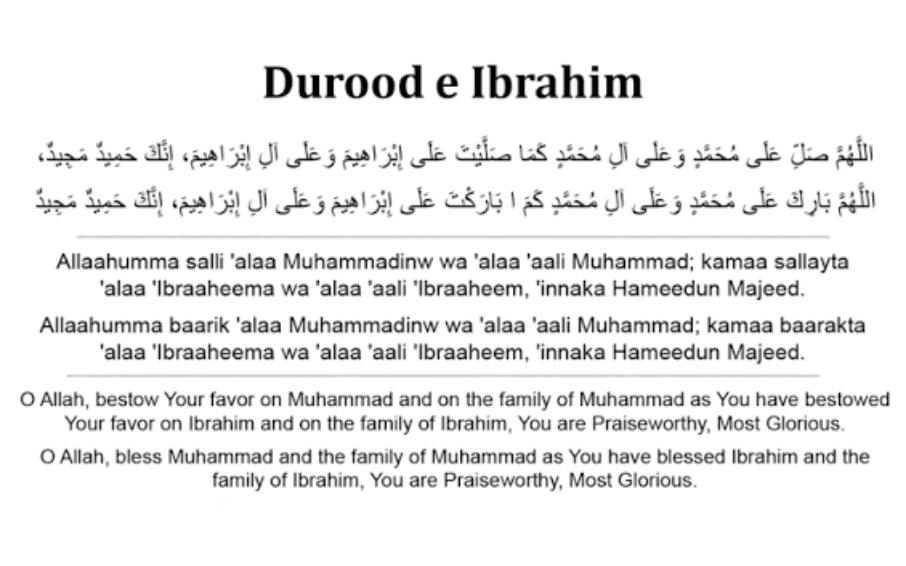
While Darood Tanjeena itself is not hadith-based, the broader practice of sending blessings upon the Prophet ﷺ is firmly established in the Quran and authentic hadith. Allah says in the Quran:
“Indeed, Allah confers blessing upon the Prophet, and His angels [ask Him to do so]. O you who have believed, ask [Allah to confer] blessing upon him and ask [Allah to grant him] peace.” (Surah Al-Ahzab, 33:56)
This verse forms the foundation for the entire practice of durood. In authentic hadith, the Prophet ﷺ said: “Whoever sends blessings upon me once, Allah will send blessings upon him ten times” (Sahih Muslim, 408). Another narration adds that ten sins are erased and ten ranks are raised for every single durood recited (Sunan an-Nasa’i, 1297). These are firmly authenticated teachings, and they show that sending blessings upon the Prophet ﷺ in any correct wording, including the well-known Durood Ibrahim recited in Salah carries immense, proven reward.
Reported Benefits of Reciting Darood Tanjeena for Problems
Many people recite Darood Tanjeena specifically during difficulty: financial strain, illness, family conflict, visa or immigration stress, exams, or delays in marriage. Because the wording itself asks Allah for relief from calamities, fulfilment of needs, purification from sin, elevation in rank, and comprehensive good in this life and the next, it functions as a heartfelt, comprehensive supplication regardless of its historical origin. Reciters commonly describe reading it in sets of 11, 100, or 1,000 during periods of stress, following the tradition of the original story.
It is worth stressing again that any calming effect, sense of hope, or relief experienced through this prayer comes from the general Islamic principle that dua and remembrance of Allah bring peace to the heart, and from the proven virtue of sending blessings upon the Prophet ﷺ not from a specific hadith-based guarantee tied to this exact wording. Framed this way, reciting it can be a sincere, permissible act of hope and remembrance, so long as one does not attribute a specific fixed reward or guaranteed outcome to it that has not been established.
Read More : Shab e Barat Dua
How Muslims in the UK, USA, and Canada Recite It Today
Across mosques and Muslim households in London, Toronto, New York, and beyond, Darood Tanjeena is often recited after the five daily prayers, during Ramadan gatherings, or in moments of collective difficulty affecting a family or community. Because Western Muslim communities are often smaller and more spread out, many people turn to this prayer as a personal, quiet practice rather than a mosque-organised one — reciting it during a commute, before an important meeting, or after Fajr. It fits naturally alongside other daily adhkar without requiring any special time or place, which is part of why it has spread so widely in English-speaking Muslim communities.
Read More : The Complete Guide to the Dua for New Month in Islam
Frequently Asked Questions About Darood Tanjeena
Is Darood Tanjeena a hadith? No. Its wording is not recorded in any of the six major hadith collections. It originates from a scholarly account of a dream experienced by Shaykh Musa al-Darir, not from a verified chain of narration back to the Prophet ﷺ.
Can I recite Darood Tanjeena for a specific problem, such as marriage or a job? Many people do recite it for worldly needs, since the wording itself asks Allah to “fulfil all our needs.” This is permissible as a general supplication, though it should not be treated as a guaranteed formula with a specific promised outcome.
How many times should Darood Tanjeena be recited? There is no fixed number required by Islamic law. Popular practice, based on the origin story, often follows counts of 11, 100, or 1,000, but any number recited sincerely is acceptable.
Is it better to recite Durood Ibrahim instead? Durood Ibrahim, recited within the daily prayers, is proven through authentic hadith and should remain a Muslim’s primary form of sending blessings upon the Prophet ﷺ. Darood Tanjeena can be recited additionally, with the understanding of its actual status.
Conclusion
Darood Tanjeena carries a moving history and heartfelt wording that has brought comfort to many Muslims facing hardship. At the same time, honesty about its status matters: it is not an authentic hadith, and its power should not be presented as guaranteed or divinely promised in the way that proven acts of worship are. What is certain, from the Quran and authentic hadith, is that sending blessings upon Prophet Muhammad ﷺ in any correct form is deeply rewarded by Allah. Readers are encouraged to prioritise the proven Durood Ibrahim, and to treat Darood Tanjeena as a permissible, hopeful supplication rather than a fixed spiritual remedy.
Disclaimer: This article is intended for general informational and educational purposes only. It does not constitute a religious verdict (fatwa). Readers are encouraged to consult a qualified local scholar for personal religious guidance, particularly regarding matters of hadith authentication and permissible practice.