
Introduction
Have you ever felt anxious even after praying, and then questioned why your heart still feels heavy? That quiet confusion can hurt more than the anxiety itself. Many believers experience racing thoughts, tightness in the chest, or a lingering sense of unease while still holding firmly to their faith. Islam does not ignore this inner struggle. Instead, it speaks to it with clarity, compassion, and deep spiritual wisdom.
A dua for anxiety is not a magic phrase or a quick emotional escape. It is an honest conversation with Allah, where fear is acknowledged rather than suppressed. Through dua, anxiety is not denied or judged; it is gently placed before the One who understands the heart better than the heart understands itself. This shift—from carrying fear alone to sharing it with Allah—is often where real healing begins.
Understanding anxiety through an Islamic lens helps us see it not as a failure of iman, but as part of the human condition. The Quran and Sunnah offer guidance that addresses both the spiritual and emotional dimensions of anxiety, allowing the believer to find peace without pretending strength.
Anxiety in the Light of the Quran and Sunnah
The Quran repeatedly acknowledges that the human heart is vulnerable to fear, sadness, and worry. Allah describes the human being as weak, easily shaken by hardship and uncertainty. This recognition alone is deeply comforting, because it removes shame from emotional struggle. Anxiety is not treated as a moral flaw, but as a state that requires care, remembrance, and reliance on Allah.
The Sunnah of the Prophet Muhammad ﷺ further reinforces this understanding. He openly taught supplications for sadness, grief, and fear, demonstrating that even the most spiritually elevated human being turned to Allah during emotional distress. This connection between revelation and lived experience shows that seeking relief through dua is not a last resort, but a prophetic practice.
By framing anxiety within divine wisdom, Islam provides a foundation where emotional pain is met with mercy rather than judgment. This perspective prepares the heart to receive the healing power of dua.
Why Making Dua for Anxiety Truly Matters
Dua changes the way anxiety is carried. Instead of circling endlessly within the mind, fear is redirected upward toward Allah. This redirection does not instantly erase anxiety, but it alters its weight. The believer moves from feeling trapped inside their thoughts to feeling supported by divine presence.
Psychologically, naming one’s fear brings clarity. Spiritually, presenting that fear to Allah builds trust. Dua creates a pause between the anxious thought and the emotional reaction, allowing the heart to breathe. Over time, this practice reshapes how the believer responds to stress, uncertainty, and emotional pain.
More importantly, dua restores meaning. Anxiety often feels overwhelming because it lacks context, but when brought into a relationship with Allah, it becomes part of a larger narrative of growth, patience, and reliance.
Powerful Duas for Anxiety and Inner Distress
The Quran and Sunnah offer supplications that address anxiety with precision and compassion. These duas do not deny pain; they give it language and direction.
One well-known supplication taught by the Prophet ﷺ asks Allah to remove sadness and anxiety while affirming trust in divine decree. This dua balances vulnerability with belief, allowing the heart to release fear without losing hope.
Another profound example is the dua of Prophet Yunus عليه السلام. Uttered from the depths of darkness, it reflects complete humility and recognition of human limitation. When recited with understanding, it reminds the anxious heart that no situation is beyond Allah’s mercy, no matter how confined or overwhelming it feels.
Each authentic dua carries emotional wisdom. When recited consistently and thoughtfully, these supplications become anchors during moments of mental unrest.
Quranic Verses That Bring Calm to the Anxious Heart
The Quran repeatedly emphasizes that true tranquility begins with the remembrance of Allah. This is not a poetic statement, but a spiritual reality. Remembrance shifts focus away from imagined outcomes and toward divine control.
Certain verses speak directly to the anxious state, reminding the believer that hardship is temporary and meaningfully measured. These verses do not promise a life without stress, but they promise presence, purpose, and divine awareness through it.
Reflecting on these verses alongside dua deepens their effect, transforming recitation into reflection and remembrance into reassurance.
Best Times to Make Dua When Feeling Anxious
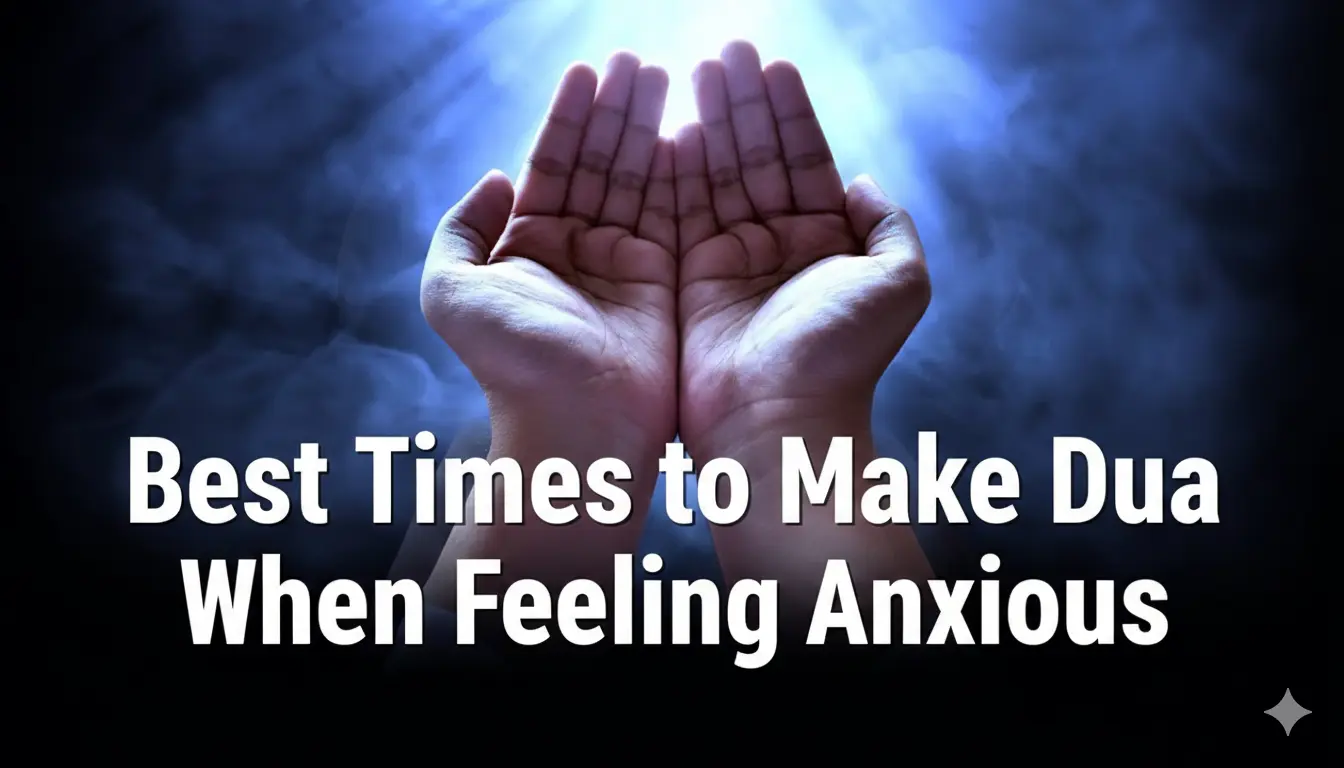
While dua can be made at any moment, certain times naturally quiet the heart. Moments after prayer, during the stillness of the night, or in the silence before sleep allow the believer to connect more deeply. These times reduce external noise and allow the heart to speak honestly.
Consistency matters more than timing. A small, sincere dua repeated daily often carries more healing than occasional long supplications made only during crisis.
Pairing Dua with Action and Trust
Islam does not separate spiritual reliance from practical effort. Making dua for anxiety while neglecting healthy routines, rest, or emotional boundaries creates imbalance. True tawakkul involves action guided by trust, not passivity disguised as faith.
Seeking clarity, reducing harmful stressors, and building emotional awareness are all compatible with dua. When effort and supplication move together, anxiety is addressed at both its spiritual and practical roots.
Is Seeking Professional Help Alongside Dua Permissible?
Islam encourages seeking benefit wherever it exists. Emotional and mental health support does not contradict reliance on Allah. Rather, it reflects wisdom in using the means Allah has placed in the world.
Dua nurtures the soul, while professional guidance may help organize thoughts and coping strategies. When combined, they form a holistic approach rooted in faith and responsibility.
Building a Consistent Dua Routine for Anxiety
Consistency transforms dua from a reaction into a relationship. Setting aside quiet moments each day for reflection and supplication trains the heart to turn to Allah before anxiety escalates.
Over time, this routine builds emotional resilience. The believer begins to feel grounded not because anxiety disappears, but because it no longer defines the inner state.
Conclusion
Anxiety does not mean the absence of faith. It means the heart is seeking reassurance in an uncertain world. Dua offers that reassurance by reconnecting the believer to Allah’s wisdom, mercy, and control.
Through sincere supplication, anxiety becomes a doorway rather than a dead end. It leads the heart toward deeper trust, quieter strength, and a peace that grows slowly, but lasts.
Frequently Asked Questions
Can anxiety be a test from Allah?
Yes, anxiety can be a form of trial meant to draw the believer closer to Allah, encouraging reflection, patience, and reliance.
How often should duas for anxiety be recited?
There is no fixed limit. Regular, sincere recitation is more important than frequency.
Can dua completely remove anxiety?
Dua may ease anxiety gradually rather than instantly. Its greatest gift is stability, clarity, and trust in Allah through the process.
What is the 3-3-3 rule for anxiety?
The 3-3-3 rule is a simple grounding technique often used when anxiety feels overwhelming. It involves noticing three things you can see, three things you can hear, and moving three parts of your body. This method works by bringing attention back to the present moment, reducing the mind’s tendency to spiral into fearful thoughts. From an Islamic perspective, this practice aligns with mindfulness and awareness, which are also cultivated through remembrance of Allah and conscious breathing.
How can anxiety be managed in Islam?
Islam approaches anxiety through balance rather than denial. It encourages acknowledging emotional pain while turning to Allah through dua, prayer, and remembrance. Alongside spiritual practices, Islam also emphasizes taking practical means, such as rest, seeking knowledge, and consulting trustworthy people. Managing anxiety in Islam is not about suppressing feelings, but about placing trust in Allah while responsibly caring for the mind and body.
What truly calms anxiety?
Anxiety is often calmed when the nervous system feels safe and the mind feels supported. Spiritually, remembrance of Allah creates inner stability by shifting focus away from uncertainty toward divine control. Emotionally, calm grows through slow breathing, self-awareness, and allowing feelings to pass without resistance. Long-lasting calm usually comes from consistency rather than instant relief.
How can someone learn to sit with anxiety instead of fighting it?
Sitting with anxiety means allowing the feeling to exist without panic or self-judgment. This does not mean accepting suffering, but recognizing that anxiety is temporary. In Islam, this practice is closely related to sabr and tawakkul. When anxiety arises, observing it calmly while making dua helps prevent escalation and teaches the heart that discomfort does not equal danger.
Dua for anxiety in Urdu
اَللّٰهُمَّ إِنِّي أَعُوذُ بِكَ مِنَ الْهَمِّ وَالْحَزَنِ، وَأَعُوذُ بِكَ مِنَ الْعَجْزِ وَالْكَسَلِ
اے اللہ! میں تجھ سے پریشانی اور غم سے پناہ مانگتا ہوں، اور بے بسی اور سستی سے بھی پناہ مانگتا ہوں۔
This dua was taught by the Prophet ﷺ and is especially beneficial when anxiety feels heavy or constant.
Dua for anxiety and depression
Anxiety and depression often overlap, affecting both thoughts and emotions. A comprehensive prophetic dua asks Allah for emotional relief while affirming trust in divine decree. Reciting such duas with understanding helps the heart feel supported rather than alone during prolonged emotional difficulty.
Dua for anxiety and overthinking
Overthinking is usually driven by fear of future outcomes. The dua of Prophet Yunus عليه السلام is particularly effective here, as it redirects the mind from self-blame to divine mercy. Repeating this supplication slowly helps interrupt mental loops and brings perspective back to Allah’s control.
Dua for anxiety and panic attacks
During panic attacks, the body reacts with intense fear. Short, familiar duas are often most effective in these moments. Seeking refuge in Allah and focusing on slow, steady recitation can help the body settle while reminding the heart that the episode will pass.
Dua for anxiety, depression, and overthinking combined
When emotional distress feels layered and complex, a general dua for well-being and protection is most appropriate. These supplications ask Allah for peace of heart, clarity of mind, and strength to endure hardship, making them suitable for ongoing emotional struggles rather than isolated moments.