Introduction: The Qur’an and Its Preservation
The preservation of the Holy Qur’an is both a historical and divine reality. It is not merely a religious claim, but a fact supported by authentic historical evidence. The Qur’an was revealed over a long period of twenty-three (23) years, and special care was taken for its protection at every stage.
The Phase of Qur’anic Revelation
(Reference: Al-Itqan fi ‘Ulum al-Qur’an, Vol. 1, p. 60)
The Holy Qur’an was revealed on different occasions—sometimes an entire chapter (Surah) and sometimes only a few verses. Revelation continued during both the Makkan and Madinan periods. The Prophet Muhammad ﷺ listened to the revelation with full attention and deep focus so that not a single word would be lost.
The Prophet ﷺ Memorizing the Revelation
(Reference: Fath al-Bari, Vol. 1, p. 9)
Initially, the Messenger of Allah ﷺ would repeat the verses immediately out of concern that they might be forgotten. Then Allah Almighty revealed in Surah Al-Qiyamah:
“Do not move your tongue swiftly with it; indeed, upon Us is its collection and its recitation.”
After this, the Prophet ﷺ would listen attentively in silence. When the revelation was completed, Angel Jibreel (Gabriel) would recite it again, and the Prophet ﷺ would memorize it perfectly.
Written Preservation of the Qur’an
(Reference: Al-Itqan, Vol. 4, p. 1)
Alongside memorization, complete arrangements were made for writing the Qur’an. Whenever revelation was completed, the Prophet ﷺ would summon the scribes of revelation and instruct them to write the verses down. These verses were written on date palm leaves, stones, bones, and pieces of leather.
It is incorrect to claim that writing was not in that era; rather, important religious material was systematically recorded in written form.
The Battle of Yamama and Compilation of the Qur’an
(Reference: Fath al-Bari, Vol. 16, p. 6)
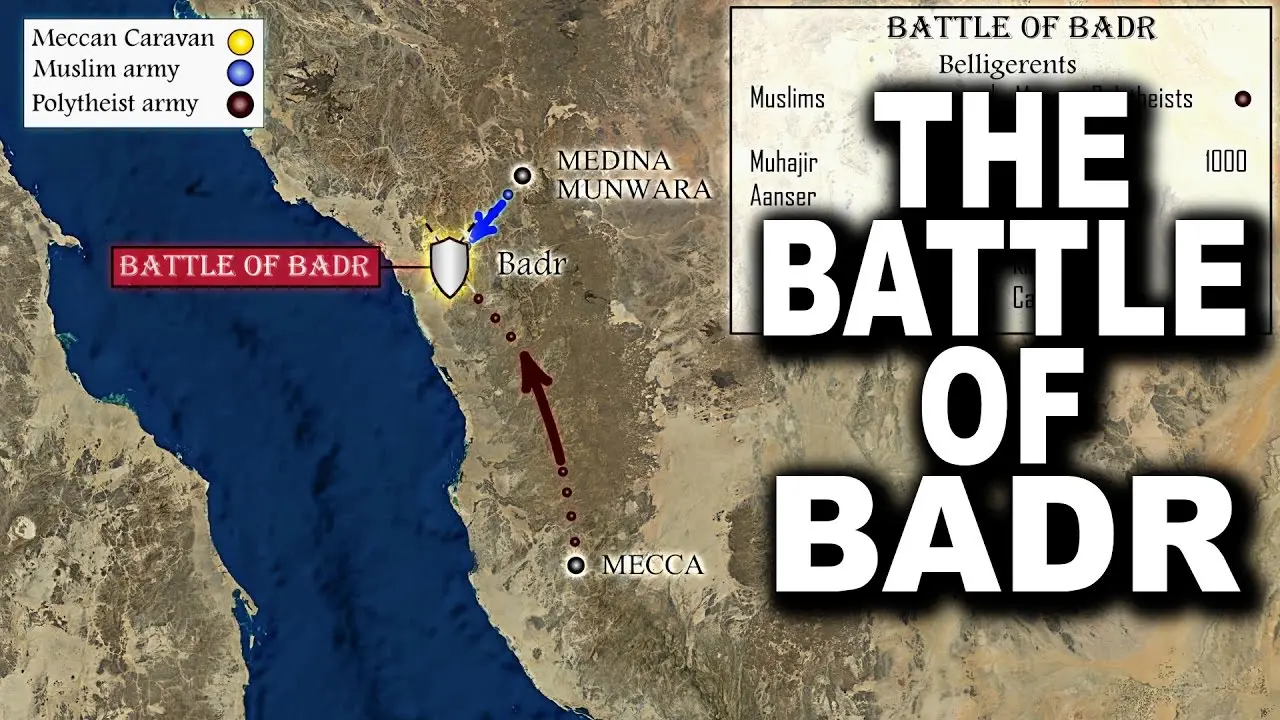
During the Battle of Yamama, approximately twelve hundred Companions were martyred, including nearly seven hundred memorizers of the Qur’an. After this tragedy, Umar ibn al-Khattab (RA) feared that if many memorizers were martyred in future battles, it would become essential to compile the Qur’an in a single collection.
Umar (RA) presented this concern to Caliph Abu Bakr (RA). Initially, Abu Bakr (RA) hesitated, but later he accepted the proposal.
The Responsibility of Zayd ibn Thabit (RA)
(Reference: Manahil al-‘Irfan, Vol. 1, pp. 253–254)
Zayd ibn Thabit (RA) was entrusted with the responsibility of compiling the Qur’an. He carried out this task with the utmost caution. Two forms of verification were required for every verse:
- Written
- Testimony of memorizers of the
Thus, the Qur’an was compiled in the form of written manuscripts (Suhuf). These manuscripts remained with Abu Bakr (RA), then with Umar (RA), and after his passing, were preserved by Hafsa (RA).
The Era of Uthman (RA) and the Mushaf Uthmani
(Reference: Fath al-Bari, Vol. 16, p. 9 | Al-Mustadrak, 229/2)
During the caliphate of Uthman (RA), Islam spread beyond Arabia to Iran, Rome, and Persia. Differences in recitation began to appear among newly converted Muslims. To eliminate these differences, Uthman (RA) formed a committee.
Preparation of the Mushaf Uthmani
The committee included:
- Zayd ibn Thabit (RA
- Abdullah ibn Zubair (RA
- Abdur Rahman ibn Harith (RA
- Sa‘id ibn al-‘As (RA)
Using the manuscripts preserved by Hafsa (RA), the Qur’an was compiled according to the dialect of Quraysh. Copies of this standardized Mushaf were then distributed to various Islamic regions.

Differences in Recitation and Their Reality
Differences in recitation do not mean differences in the Qur’an itself. Rather, they reflect variations in pronunciation and dialect, all of which are authentically traced back to the Prophet ﷺ. All recognized recitations are based on revelation and are valid.
Divine Protection of the Qur’an
The preservation of the Holy Qur’an is a divine promise of Allah:
Indeed, We have sent down the Reminder, and indeed, We will surely guard it.
This is why the same Qur’an is recited throughout the world today, regardless of country or language.
Reference Books and Sources
The historical information presented in this article is derived from the following authentic Islamic sources, all of which were mentioned in the original text:
- Fath al-Bari (Vol. 1/9, 16/6, 16/9, 17/29
- Al-Itqan fi ‘Ulum al-Qur’an (Vol. 1/60, 4/1
- Manahil al-‘Irfan fi ‘Ulum al-Qur’an (Vol. 1/253–254
- Ma‘arif al-Qur’an (pp. 35–44
- Al-Mustadrak ‘ala al-Sahihayn (Reference: 229/2
These works are regarded as authoritative sources in Qur’anic sciences, compilation of the Mushaf, Qira’at, and Islamic history.
FAQ: Frequently Asked Questions About the Preservation of the Qur’an
Q1: Was the Qur’an written during the lifetime of the Prophet ﷺ?
Yes. Along with revelation, the Qur’an was preserved in written form through the scribes of revelation (Fath al-Bari, Vol. 1, p. 9).
Q2: When was the Qur’an compiled into a single manuscript?
After the Battle of Yamama, during the caliphate of Abu Bakr (RA), the Qur’an was compiled into written manuscripts (Fath al-Bari, Vol. 16, p. 6).
Q3: Why was the Mushaf Uthmani prepared?
To eliminate differences in recitation and unify the Muslim Ummah upon one standardized text (Fath al-Bari, Vol. 16, p. 9).
Q4: Is today’s Qur’an the same as what was revealed to the Prophet ﷺ?
Yes. The Qur’an today is exactly the same, word for word, as it was revealed, preserved by Allah’s promise.
Conclusion
The preservation of the Holy Qur’an has been a continuous and systematic process. From the moment of revelation through the era of the Rightly Guided Caliphs and up to the present day, the Qur’an has remained perfectly preserved. This stands as a luminous chapter in Islamic history and a practical manifestation of Allah’s divine promise.