

You can earn great spiritual reward by fasting six days of Shawwal after Ramadan, and this practice can be observed any time during the month without needing to fast them consecutively. Fasting these six days is widely understood to multiply the reward of your Ramadan fasts, making it as if you fasted a full additional year when combined with Ramadan.
This post will explain why scholars value Shawwal fasting, the rulings and practical steps to perform it, health considerations, and common misconceptions so you can decide how to incorporate it into your worship and routine. Follow the guidance here to keep your Ramadan momentum, fulfill the conditions properly, and fast in a way that fits your life.
Significance of Shawwal Fasting
Fasting six days in Shawwal after Ramadan helps extend Ramadan’s spiritual discipline and offers a specific, narratively supported reward. It strengthens routine worship, aids repentance continuity, and carries a distinctive virtue tied to prophetic practice.
Spiritual Benefits of Shawwal Fasting
You preserve the momentum of Ramadan by intentionally continuing voluntary worship. Fasting six days promotes regularity in prayer, Quran recitation, and self-restraint, which reduces the spiritual drop-off that often follows Eid celebrations.
You also reinforce personal discipline: shorter, manageable fasts immediately after Ramadan make it easier to maintain healthy habits like early rising for prayer and avoiding excesses at meals.
For many, these fasts provide psychological closure to the Ramadan season. They offer a tangible practice that transitions you from intensive obligatory fasting to a steadier pattern of voluntary worship.
Reward and Virtue According to Hadith
A widely cited hadith reports that fasting Ramadan plus six days of Shawwal equals the reward of fasting an entire year. Scholars interpret this as multiplying good deeds rather than literal day-for-day accounting.
You gain a compounded spiritual benefit because the Prophet’s practice (Sunnah) frames these days as meritorious. Many jurists permit non-consecutive observance and combining intentions where valid, which gives you flexibility if you need to make up missed Ramadan fasts.
Be mindful of timing: the six fasts are observed during Shawwal, after Eid al-Fitr, and are best done within that lunar month to align with the hadith’s context.
Read More : https://theorbitquran.com/amaal-of-shabaan-preparation-for-ramadan/
Comparison With Ramadan Fasting
Ramadan fasting is obligatory, aimed at communal obligation, repentance, and the revelation of the Quran. Shawwal fasting is voluntary, shorter in duration, and intended to supplement Ramadan’s spiritual gains.
You experience a different emphasis: Ramadan focuses on firm obligation, communal worship, and intensified night prayer (Taraweeh and Laylat al-Qadr). Shawwal fasts emphasize continuity, personal discipline, and the specific prophetic virtue associated with the six days.
Practically, Ramadan fasting requires full-month commitment and exemptions for illness or travel, while Shawwal’s six fasts offer flexibility—non-consecutive days are generally accepted—making them accessible for gradual spiritual maintenance.
Rulings and Conditions
You can earn the special reward by fasting six days in Shawwal after completing Ramadan. The practice is recommended, not obligatory, and carries specific eligibility rules and timing options.
Who Should Fast the Six Days of Shawwal
You should fast the six days if you are an adult Muslim who completed Ramadan’s obligatory fasts and is able to fast without undue harm. The act is a Sunnah mu’akkadah (strongly recommended) in many scholarly opinions, meaning it’s highly encouraged but not required.
Do not attempt these fasts if you are ill, pregnant, breastfeeding, elderly with genuine risk, or otherwise exempt from regular fasting. If you missed Ramadan fasts and still need to make them up, prioritize qada (making up missed Ramadan fasts) before or alongside Shawwal days.
If you are healthy and able, fasting six days demonstrates continuity of worship and accrues the specific reward described in classical hadith literature.
Eligibility and Exemptions
You become eligible once you have completed Ramadan’s obligatory fasts or have made the missed fasts up as required. Eligibility requires physical capacity, mental competence, and lawful intention (niyyah) to fast each day before dawn.
Exemptions include ongoing illness, pregnancy, breastfeeding with health risk, the elderly when fasting is harmful, and travelers when fasts cause hardship. In those cases, you should either postpone to when you’re able, perform qada if required, or offer fidya if permanently unable to fast, following your madhhab or local authority.
If you break a Shawwal fast for a valid reason, make it up later in Shawwal or another permissible time; you won’t lose the reward if the break was unavoidable and you resume as soon as possible.
Fasting the Six Days: Consecutive or Separate
You may fast the six days consecutively or spread them across the month of Shawwal. Different schools of thought offer guidance: many Shafi‘i scholars prefer them consecutively starting the second day of Eid, while Hanafi guidance often permits or prefers spacing them out.
Choose the approach that fits your circumstances. Fasting consecutively can be easier for some and is widely viewed as most virtuous, while spacing days suits those with work, travel, or family obligations.
Ensure each fast meets the usual conditions: intention before dawn, abstention from food, drink, and other nullifiers from fajr until maghrib, and avoidance of actions that invalidate fasting.
How to Perform Shawwal Fasting

Fasting six days in Shawwal follows a simple practical pattern: choose six non-Eid days in Shawwal, intend each fast properly, and ensure any required Ramadan fasts (qada’) are completed first if possible. Observe normal fast rules, maintain prayer and charity, and avoid the prohibited acts that break the fast.
Recommended Guidance and Etiquette
Intend the fast as a voluntary (nafl) act for the sake of Allah and keep your heart focused on gratitude for Ramadan’s completion. Maintain the five daily prayers on time, increase dhikr and Qur’an recitation, and give extra charity; these actions amplify the fast’s reward.
Break your fast at sunset (maghrib) with moderation. Avoid ostentation about fasting and do not fast on the day of Eid (1 Shawwal). Dress and behave modestly during the day; if you attend community events, ensure they don’t involve forbidden food or drink before maghrib.
Timing and Intention
You may fast any six days in Shawwal except the first day (Eid al-Fitr). Days need not be consecutive; pick days that suit your schedule and health. If you prefer consecutive days, many choose the first available working days after Eid, but spreading them across the month is equally valid.
Form a fresh intention (niyyah) each day before fajr or at the start of the fast. The intention can be verbal in your heart—explicit words are not required. If you also need to make up missed Ramadan fasts, state your intention clearly (see next subsection) to avoid mixing obligatory and voluntary fasts incorrectly.
Making Up Missed Ramadan Fasts Before Shawwal
If you owe qada’ fasts from Ramadan, prioritize completing them before observing the six Shawwal fasts when possible. Scholars differ: many recommend making up Ramadan missed fasts first so the Shawwal fasts remain purely voluntary and grant the promised “year’s reward” effect.
You may combine intentions only when a reliable scholarly opinion allows it, but avoid dual intention unless you know your school permits it. If you cannot finish qada’ fasts before Shawwal, complete as many as feasible and then perform remaining Shawwal days—your qada’ still counts and you keep voluntary fasts separate.
Common Misconceptions
Many people confuse required fasting rules with recommended practices and misinterpret specific hadiths about the six days. Clear distinctions and correct contexts resolve most doubts.
Difference Between Obligatory and Voluntary Fasting
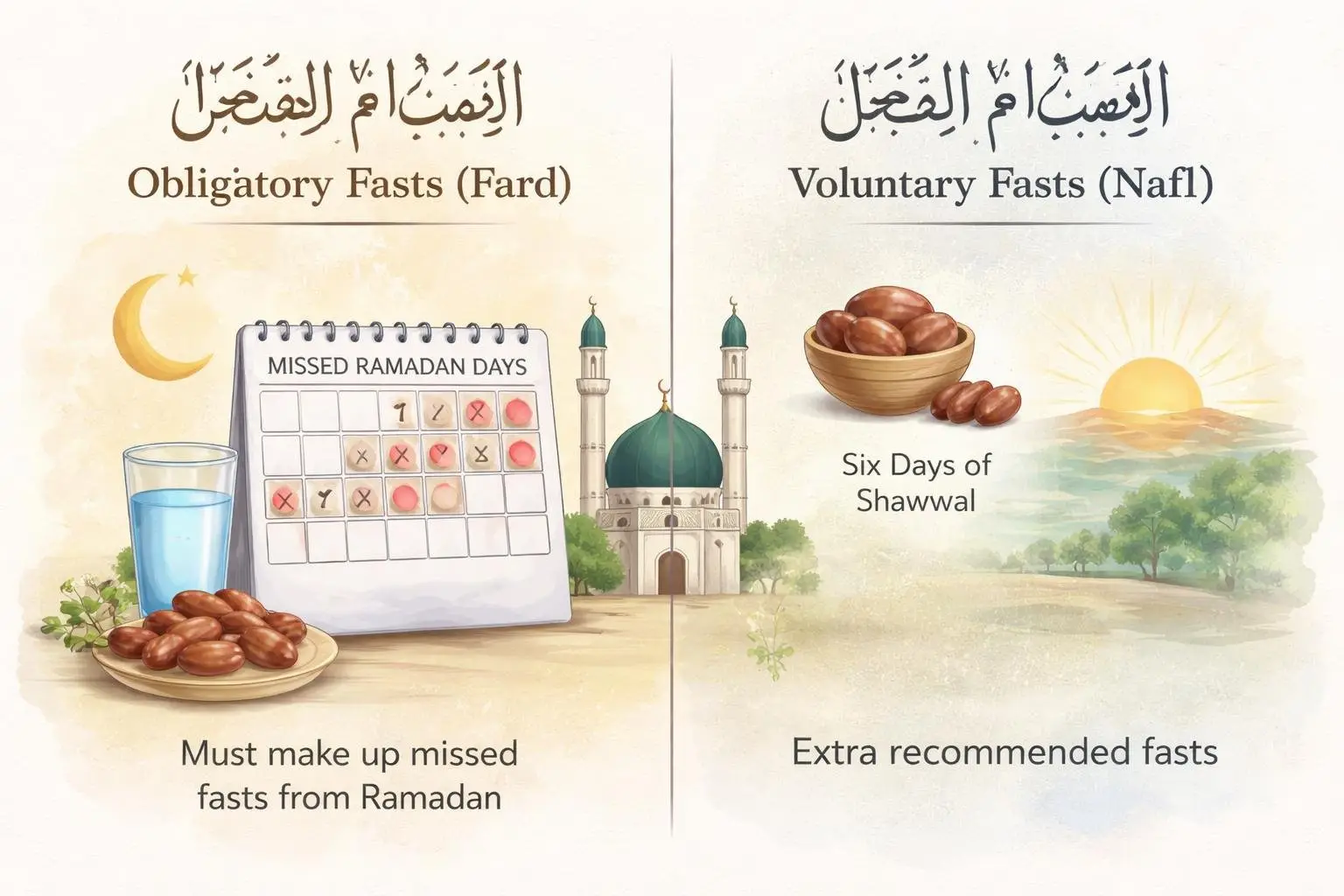
You must distinguish between obligatory (fard) fasts and voluntary (nafl) fasts. Obligatory fasts include missed Ramadan days that you are legally required to make up; you should complete those first if you have unfinished Ramadan fasts. Voluntary fasts, like the six days of Shawwal, are recommended extra acts of worship that carry reward but do not replace wajib duties.
You can intend a fast for a dual purpose only when both rulings allow it. For example, if you need to make up a Ramadan day, you may not combine that single make-up with the Shawwal six as a dual intention in all scholarly opinions; check the view you follow. The six Shawwal fasts can be done consecutively or spread across Shawwal, and missing one does not nullify the reward once you complete six days within the month.
Misunderstood Hadith on Shawwal Fasting
You likely saw the hadith stating that fasting Ramadan then six days of Shawwal equals fasting a full year. That hadith expresses a legal maxim: rewarding ten good deeds as equivalent to a greater amount, not a literal 365-day fast. Scholars interpret it as multiplication of reward, contingent on intention and actual fulfillment of Ramadan and the six days.
Some people treat the hadith as obligating annual repetition or requiring consecutiveness; neither is correct. The hadith motivates you to pursue extra worship, but it does not create a binding yearly duty or demand that the six days immediately follow Eid. Context matters: verify chains of transmission and juristic explanations you follow to apply the hadith correctly.
Health Effects and Considerations
Fasting six days in Shawwal can affect digestion, hydration, energy levels, and immunity. Proper meal timing, nutrient choices, and monitoring of existing conditions will help you fast safely.
Physical Impact of Additional Fasting
You may experience improved insulin sensitivity and short-term calorie reduction, which can aid weight control if you avoid overeating at Iftar and Suhoor. Expect changes in bowel habits; increase fiber at Suhoor (whole grains, beans, vegetables) to prevent constipation and support steady blood glucose.
Hydration status matters. Drink water steadily between Iftar and Suhoor — aim for 1.5–2 liters unless a clinician advises otherwise — and include electrolyte sources like yogurt or a small portion of fruit. If you take regular medications (for diabetes, hypertension, thyroid), consult your provider because dosing timing and blood-glucose responses can change during daytime fasting.
Listen to warning signs: dizziness, fainting, severe headache, chest pain, or recurrent hypoglycemia mean stop fasting and seek care. Pregnant or breastfeeding people, children, the elderly, and those with uncontrolled chronic diseases should get medical advice before attempting these fasts.
Tips for Maintaining Well-Being During Shawwal
Plan balanced Suhoor and Iftar to stabilize energy: combine protein (eggs, legumes), low-GI carbs (oats, whole-grain bread), healthy fats (olive oil, nuts), and fiber. Start Iftar with water and a small portion of easily digestible food (dates or fruit), then wait 10–20 minutes before a full meal to avoid indigestion.
Pace physical activity: keep to light to moderate exercise after Iftar or later in the evening. Avoid high-intensity workouts while fasting to reduce risk of dehydration and excessive fatigue. Prioritize sleep; try to get 6–8 hours total by napping if nighttime sleep is fragmented.
If you have chronic conditions, document any symptom changes and measure vitals as advised (blood glucose, blood pressure). Break the fast if you experience severe symptoms. Use gradual refeeding after the month to prevent gastrointestinal upset.
Shawwal Fasting in the Islamic Calendar

Shawwal begins immediately after Ramadan and opens with Eid al-Fitr. Fasting six days during Shawwal is a recommended Sunnah that carries significant spiritual merit when performed after completing Ramadan’s fasts.
Historical Context of Shawwal
You should know Shawwal is the tenth month of the Islamic lunar calendar and directly follows Ramadan. The Prophet Muhammad ﷺ reported the practice of fasting six days in Shawwal after Eid al-Fitr; scholars derive the ruling from authentic hadith describing this specific voluntary act.
The reward associated with these six fasts is often explained as equivalent to fasting a full year, based on prophetic wording that links ten good deeds being recorded as the reward of one. Jurists discuss timing and intention: the six days need not be consecutive, and you may combine them with missed Ramadan fasts if you make the proper intention. Schools differ slightly on combining intentions, so check the view you follow if you need precision.
Other Sunnah Fasts Related to Shawwal
You can observe additional Sunnah fasts around Shawwal that complement spiritual momentum from Ramadan. The most directly related are the six days of Shawwal; others include the regular voluntary fasts like Mondays and Thursdays, and the white days (13th–15th of each lunar month), which some people observe to maintain consistency in worship.
Practical points to consider:
- The six Shawwal days can be any days within the month after Eid.
- They are voluntary, not obligatory, so missing them carries no sin.
- If you still owe Ramadan fasts, you may fast those first and then complete six Shawwal days, but intentions matter and juristic opinions vary.
Use these fasts to stabilize post-Ramadan routines and sustain the spiritual benefits you gained during Ramadan.
Practical Tips for Fasting Shawwal
Plan timing, manage energy, and involve family or community to make the six fasts consistent and spiritually meaningful. Focus on specific routines for suhoor/iftar, work adjustments, and simple ways to share the practice with others.
Balancing Shawwal Fasting With Daily Life
Choose six days that fit your work, health, and social calendar. If you work long hours or have shift patterns, pick non-consecutive days (e.g., two per week) or weekends to avoid productivity drops.
Arrange heavier tasks for mornings after suhoor when energy is higher, and schedule focused work in 90–120 minute blocks with short breaks to prevent fatigue.
Adjust nutrition: eat a protein-rich suhoor (eggs, yogurt, whole grains) and hydrate well to reduce midday hunger. Break fast with fluids and a light meal to avoid post-iftar lethargy.
If you have health conditions or medication schedules, consult your healthcare provider before fasting. Pregnant, breastfeeding, or chronically ill persons should follow medical and scholarly guidance and consider making up fasts later if needed.
Community Practices and Family Traditions
Coordinate with family to fast on shared days to strengthen consistency and mutual support. Agree on a simple rotating schedule, announce chosen dates in a family group chat, or set calendar reminders to avoid misalignment.
Share suhoor or iftar when possible; even a short communal meal or joint dua increases motivation and spiritual focus.
Engage your local mosque or community center by asking about group-fast plans or weekly reminders. Volunteer to lead a short post-iftar discussion or share concise reminders about the prophetic hadith on Shawwal to encourage others.
Use small, practical roles preparing dates, setting up seating, or organizing a shared recipe—to make participation sustainable and welcomed by busy households.
Frequently Asked Questions (FAQ)
1. What is Shawwal fasting?
Shawwal fasting refers to keeping 6 voluntary fasts in the month of Shawwal after Eid-ul-Fitr. It is a Sunnah practice.
2. What is the reward of fasting 6 days of Shawwal?
According to a Hadith of Prophet Muhammad:
Whoever fasts Ramadan and follows it with six days of Shawwal, it is as if he fasted the whole year.
3. Is fasting Shawwal compulsory (Farz)?
No, Shawwal fasting is not obligatory. It is Sunnah (recommended) but highly rewarding.
4. When can I start Shawwal fasts?
You can start fasting from 2nd Shawwal (the day after Eid-ul-Fitr), since fasting on Eid day is not allowed.
5. Do the 6 Shawwal fasts have to be consecutive?
No, you can fast:
- Consecutively (6 days in a row)
- Or separately throughout the month
Both are valid.
6. Can I fast Shawwal before making up missed Ramadan fasts (Qaza)?
Scholars differ, but the safest opinion:
- First complete Qaza fasts
- Then keep Shawwal fasts
7. Can I combine intention (Qaza + Shawwal)?
Some scholars allow it, but many recommend:
- Separate intentions for maximum reward
8. What if I miss Shawwal fasts?
If Shawwal ends, you cannot make them later as Shawwal-specific reward is tied to that month.
9. Can women fast Shawwal if they missed Ramadan fasts due to menstruation?
Yes, but it is الأفضل (better) to:
- First complete missed Ramadan fasts
- Then observe Shawwal fasts
10. Can I fast on Fridays or Saturdays during Shawwal?
Yes, you can fast any day in Shawwal, including Friday or Saturday, especially when completing the 6 fast