1. Background of Revelation
At that time, arrogance had become common and the beliefs of people had become corrupted.
Darkness had spread everywhere from a moral perspective.
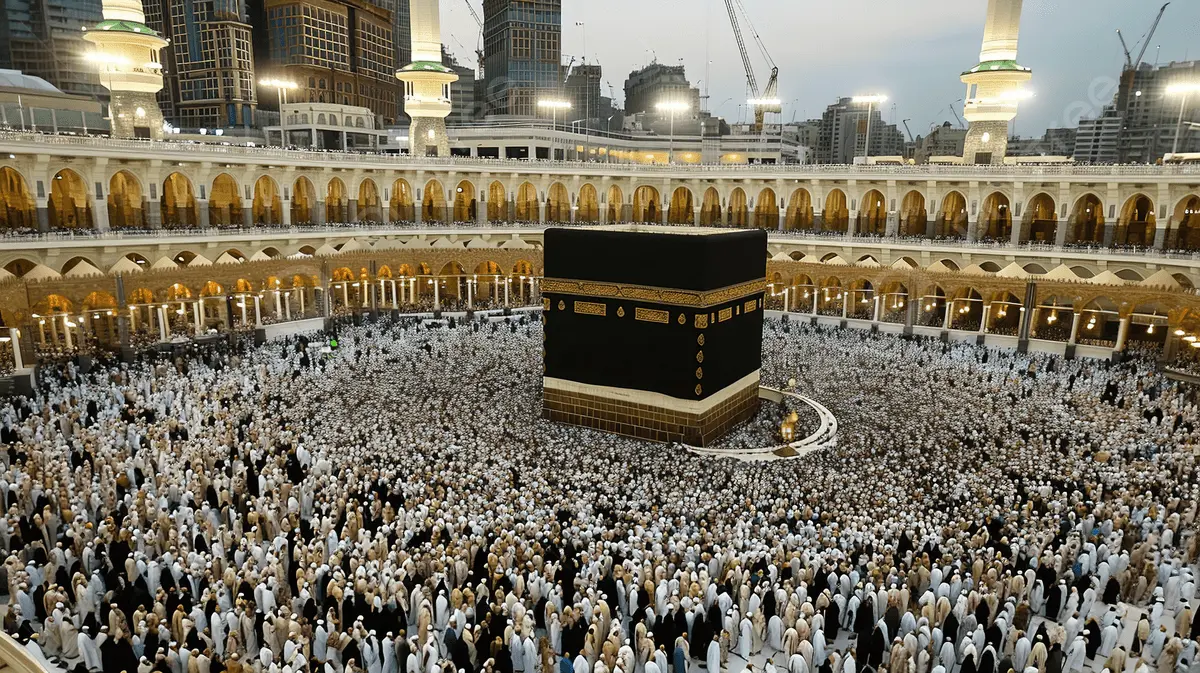
360 idols were being worshipped in the Kaaba, which was originally built by Prophet Ibrahim (A.S.) and Prophet Ismail (A.S.) for the worship of Allah.
Jews and Christians also held reverence for these idols.
Instead of worshipping Allah, worship of others had become widespread.
There was killing, bloodshed, conspiracies, and an atmosphere of opposition everywhere.
In such circumstances, a person feels loneliness, and only the Oneness of Allah becomes a source of peace.
2. Why Was This Surah Revealed?
Allah Almighty accepted the supplication and granted honor to the one who was helpless.
Allah granted Prophet Sulaiman (A.S.) kingship over the world, and in a similar style, this Surah was revealed.
Explaining this Surah is necessary so that its benefits become clear.
Read More : https://theorbitquran.com/
3. Benefits of Surah Al-Inshirah
Those who work for knowledge, education, preaching, and reform should never be negligent.
One should adopt principles for seclusion, remembrance of Allah, and turning towards Allah.
Acting upon this Surah’s teachings and guidance in light of the pious predecessors is essential.
4. The Meaning of Sharh-e-Sadr (Expansion of the Chest)
Outer Sharh-e-Sadr:
The chest opens, knowledge is gained, actions improve, and the heart develops the greatness of Allah.
Inner Sharh-e-Sadr:
The heart becomes soft and filled with knowledge, leading to spiritual peace.
5. Excerpt from Ma’arif-ul-Quran (Volume 3, Page 83)
Worship should continue to the extent that one feels elevation, progress, and spiritual development in prostration.
The sense of Allah’s greatness and Lordship should develop during worship.
6. Importance of Character and Manners
Islam gives great importance to character and manners.
All Prophets spread justice and upheld noble qualities.
Human beings have been sent to this world to display good character.
Surah Ar-Rahman, verse 45, para 27, supports this.
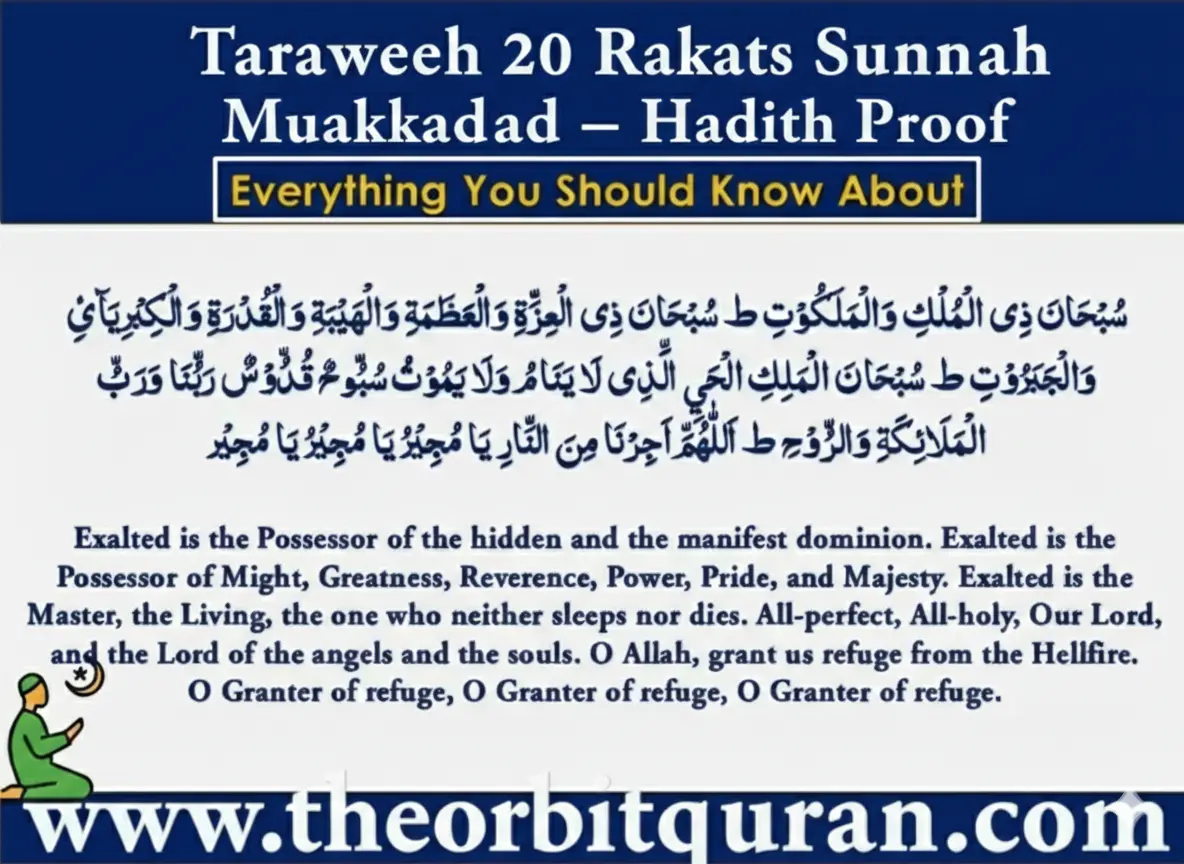
Read More : https://theorbitquran.com/taraweeh-prayer-ramadan/
7. Spiritual Practices and Remedies
🔸 Removal of Whisperings of the Heart:
Whoever recites Surah An-Naas and Surah Al-Falaq consistently along with prayer and fasting, and performs dum (spiritual blowing), Insha’Allah the whisperings will disappear and the heart will find peace.
🔸 Relief from Debt Through Surah Al-Inshirah:
Reciting Surah Al-Inshirah a fixed number of times after Fajr and Isha prayers will, Insha’Allah, bring relief from debt
Surah Al-Inshirah – Frequently Asked Questions (FAQ)
1. What is Surah Al-Inshirah about?
Surah Al-Inshirah is about Allah’s mercy, spiritual expansion, relief from distress, and the strengthening of the Prophet ﷺ’s heart. It teaches that ease always comes after hardship.
2. What is the purpose of Surah Al-Inshirah?
Its purpose is to give hope, lift a person out of sadness and depression, and strengthen reliance on Allah. This Surah provides deep spiritual motivation.
3. What are the benefits of reciting Surah Al-Inshirah?
- It brings relief from inner stress and anxiety
- Increases blessings in sustenance
- Removes negativity and emotional burden
- Brings ease in difficult tasks
- Strengthens trust in Allah
4. Why is this Surah called “Sharh-e-Sadr”?
Because Allah mentions “opening the chest” of the Prophet ﷺ — meaning He removed his burdens and strengthened him spiritually.
5. What is the connection between Surah Al-Inshirah and Surah Ad-Duha?
Both Surahs were revealed to comfort the Prophet ﷺ.
Surah Ad-Duha brings hope, while Surah Al-Inshirah promises ease after hardship. Together, they provide powerful spiritual reassurance.
6. What does “Fa inna ma’al usri yusra” mean?
It means:
“Indeed, with hardship comes ease.”
Allah emphasizes that every hardship comes with multiple forms of ease.
7. Is it beneficial to recite Surah Al-Inshirah daily?
Yes. It is very beneficial for daily stress, sustenance, emotional hardship, and life difficulties. Reciting it with dhikr and dua brings peace to the heart.
8. When was Surah Al-Inshirah revealed?
It was revealed in Makkah during a period when the Prophet ﷺ faced emotional and physical hardships. This Surah provided him with hope and strength.
9. Does Surah Al-Inshirah help remove difficulties?
Yes. It helps a person overcome distress, builds courage, and strengthens faith in Allah’s help.
10. Is Surah Al-Inshirah used in any specific spiritual practices (wazifa)?
Many people recite it for:
- Getting a new job
- Emotional healing
- Financial difficulties
- Household problems
But the most powerful tools are sincere intention and dua..
5. The Deeper Meaning of Verse 8: “Wa ila rabbika farghab”
The concluding verse of Surah Al-Inshirah, “Wa ila rabbika farghab” (“And to your Lord direct all your longing”), carries profound spiritual significance. This statement invites the believer to turn wholeheartedly towards Allah in every circumstance. Scholars interpret this as urging complete devotion—after facing challenges, finding relief, and experiencing the expansion of the heart, a person should channel all aspirations and hopes to their Lord alone.
Spiritually, this verse points to a stage where the soul, purified by trials and enriched with knowledge, enters a state of closeness to its Creator. In this presence, worldly distractions fade, and connection with Allah becomes the soul’s true longing. It is a reminder that true elevation is not merely outward ease, but the inward orientation of the heart towards its Sustainer. Through utter trust, submission, and heartfelt yearning, one’s spiritual journey reaches fulfillment—standing before Allah in humility and hope, seeking only His pleasure.
This enduring message encourages us to keep our attention fixed on our ultimate goal: to draw closer to Allah, especially after being granted relief and clarity.
Understanding Verse 7: “Fa iza faraghta fainsab” and Its Connection to Fana
This journey of expansion leads us to the profound meaning found in the seventh verse of Surat al-Inshirah: “Fa iza faraghta fainsab”—“So when you have finished [your duties], then stand up [for worship].” The significance of this verse within the path of fana (annihilation) unveils a deeper dimension of surrender.
Significance in the Context of Fana
When a seeker reaches the state of fana, the self is subdued and the ego is left behind. In this context, “fa iza faraghta fainsab” serves as both a gentle directive and a profound insight. Here, Allah reminds the traveler that once the outward form—worldly efforts and actions—are completed, the real task begins: rising in worship, presence, and spiritual striving.
- Release from the Self: The completion of external duties signals a release from being solely focused on the self, allowing the soul to ascend beyond the limitations of ego.
- Awakening to Spiritual Purpose: This standing up, or “insab,” is more than physical prayer; it symbolizes awakening to the true purpose of being—intimate worship and connection with the Divine, unshackled by worldly distractions.
- Movement into the Ocean of Divine Reality: The verse alludes to the transition from outer struggle to inner presence, where the soul, no longer restrained by the body’s demands, is free to immerse in the ocean of annihilation (fana). Here, divine realities are unveiled, and spiritual peace deepens.
In essence, verse 7 guides the seeker from the closure of worldly affairs to the opening of higher spiritual states—where the heart, having surrendered, stands ready to be filled with the light and presence of worship.
The Spiritual Symbolism of the Prophet Muhammad’s (ﷺ) Heart Being Cleansed
The well-known account of the Prophet Muhammad’s (ﷺ) heart being purified by the angel Jibreel (A.S.) carries profound wisdom about spiritual refinement. When the Prophet (ﷺ) was a child in the care of Sayyidah Halima, the angel was sent by Allah to physically open his chest, remove all traces of anything unwelcome, and cleanse his heart with divine light.
This extraordinary event represents more than a physical miracle—it is a powerful symbol of inner purification. The cleansing of the blessed heart was protection from all negative influences, ensuring that the Prophet (ﷺ)’s character would remain untouched by evil, temptation, or spiritual impurity. By removing any potential foothold for Shaytaan, the foundation was laid for a heart filled entirely with light, compassion, and wisdom.
For us, this story emphasizes the importance of spiritual cleanliness—striving to keep our own hearts free from malice, arrogance, and worldly distractions. Just as the Prophet’s (ﷺ) heart was prepared for the immense responsibility of guiding humanity, we too are encouraged to seek inner purification, allowing Allah’s greatness and mercy to reside within us. This path leads to true spiritual elevation and peace.
Quranic Verses and the Journey of Inner Resurrection
Moving forward, two profound Quranic verses—17:80 and 94:4—illuminate the path of inner transformation and the concept of a noble rebirth.
Verse 17:80: Entering and Exiting with Truth and Honor
“Say: O my Lord, let my entry be by the gate of truth and honor, and likewise my exit by the gate of truth and honor…” — this verse from Surah Al-Isra captures the essence of sincere surrender. When a person willingly submits their ego, choosing truth over illusion and dignity over pride, this act of letting go is itself a form of spiritual ‘death’. The heart becomes receptive to a higher guidance, ushering in a new state—one marked by integrity and divine assistance.
Verse 94:4: The Elevated Remembrance
The second, from Surah Ash-Sharh, reads: “And We raised high for you your repute.” Here, the heart’s transformation culminates in an elevated remembrance—no longer weighed down by the world’s distractions, but instead resonating with the sincere praise of the Divine. As one’s inner state dies to lower tendencies and is “raised” to higher awareness, their remembrance is uplifted too, echoing with peace and purpose.
The Link Between Verses and Inner Change
- These verses reflect a profound inner journey:
- Letting go of old habits and attachments
- Embracing guidance with humility
- Experiencing an inner “resurrection” that brings clarity and noble character
This process can be likened to emerging from darkness into light. The heart, softened and expanded, hears the subtle praise within—connection, solace, and the true nobility that faith bestows.
How Awliya Carry and Manifest the Realities of Surah Al-Inshirah
Awliya, or the close friends of Allah, are granted deep understanding and connection to the truths embedded in Surah Al-Inshirah.
Just as a fountain overflows and nourishes its surroundings, these spiritually realized individuals become channels of divine wisdom and compassion. The illumination and vastness that Allah bestows upon their hearts is not confined to themselves—it spreads outward, touching the lives of those around them.
Through their words, actions, and character, such personalities embody the essence of the Surah. Their hearts brim with knowledge and mercy, and they offer guidance, hope, and tranquility much like soothing water in times of hardship. When they speak or interact, they uplift communities, foster spiritual growth, and remind others of Allah’s greatness.
This living transmission of spiritual realities serves to beautify society and inspires others to seek closeness to Allah, mirroring the transformative power outlined in this blessed chapter.
Read More : https://theorbitquran.com/contact-us/
Related Spiritual Concepts: Lataif, Mawt Qablil Mawt, and the Secrets of the Heart
Beyond the outer and inner “sharh-e-sadr,” classical spiritual traditions also highlight related concepts that illuminate the heart’s journey.
- Lataif (Subtle Energy Points): These are considered spiritual centers or points within the heart and body that awaken through remembrance (dhikr) and discipline, refining one’s consciousness and fostering deeper awareness.
- Mawt Qablil Mawt (Death Before Death): This phrase refers to transcending worldly desires before physical death—essentially, letting go of the ego’s grip so that a person may live in a state of spiritual surrender and presence.
- Fana and Baqa (Annihilation and Subsistence): Fana speaks to the dissolution of the self in the Divine, while baqa is the state of spiritual endurance that follows this union, allowing one to remain present in the world but rooted in higher awareness.
- Secrets of the Heart (Qalb, Sirr, etc.): Many teachings speak about the “qalb” (heart) as the epicenter of spiritual insight. Deeper still are levels known as sirr (the secret) and sirr e sirr (the secret of the secret), indicating ever-unfolding layers of inner reality accessible to the seeker.
- The Hidden and the Manifest: Concepts like “akhfa” (the most hidden) and “khafa” (hidden) remind us that the heart contains mysteries not always readily apparent, resonating with hadith traditions that describe the heart as the “house of the Lord” and “a hidden treasure desiring to be known.”
- The Stories of the Prophets and Saints: Spiritual narratives often reference figures like Hazrat Abu Bakr as-Siddiq (as) and Sayyidina Musa (as), using their experiences to illustrate the stages and stations (maqam) through which the heart journeys toward Allah.
These themes, reflected in teachings, parables, and even scriptural references such as Surah Inshirah and Surat ash-Sharh, collectively invite seekers to explore the depth, resilience, and vast potential of the heart’s expansion.
Lataif: Gateways to Knowledge and Liberation
Engaging with the lataif—the subtle spiritual centers of the heart—opens the door to genuine understanding. Much like light illuminating a dimly lit room, awakening these points within the heart dispels the shadows of ignorance and brings true knowledge to life.
When these centers are activated, one begins to absorb spiritual wisdom and insight. This is a journey from darkness (zulum), a state characterized by confusion and narrowness, toward the clarity and expansion gifted by knowledge. Ignorance, after all, keeps hearts closed and spirits stagnant—while knowledge animates, softens, and nurtures.
Through this process, the heart not only gains information, but is liberated from the confines of its own limitations. The oppressive weight of heedlessness is lifted, and spiritual growth takes root. In this way, nurturing the lataif is more than self-improvement: it’s the very means by which the heart is set free and the soul begins to thrive.
The Connection Between Lataif al Qalb and Surat Al-Inshirah
To truly appreciate the depth of sharh-e-sadr (expansion of the chest), one must consider the subtle centers of the heart, or lataif al qalb, and how they mirror the verses of Surat Al-Inshirah. At the heart’s foundational station, the Qur’anic words, “Did We not expand for you, [O Muhammad], your chest?” (94:1), are more than poetic reassurance—they point to a direct infusion of divine light and understanding right into the core of the human heart.
The Journey from Ignorance to Illumination
Just as a dark room is transformed by the light of a single candle, the heart, left to ignorance, cannot guide itself until blessed by Allah’s divine spark. When the heart receives this illumination, the darkness of confusion and worldliness is replaced with clarity, wisdom, and the acknowledgment of Allah’s greatness. The process isn’t accidental: every beam of guidance, every gentle nudge away from old habits or destructive thinking, is a reflection of this expansion that the verse describes.
The Heart as a Receptacle for Guidance
It is through this sacred process that the heart begins to soften, grow in knowledge, and anchor itself in spiritual certainty. Whether someone is born within the fold of faith or stumbles upon guidance after life’s trials, the underlying mechanism remains the same. The heart’s subtle centers—its lataif—are “dressed” by these verses. Each experience of change, every moment where truth displaces falsehood, is a miniature sharh-e-sadr in action.
Reflecting the Reality in Our Daily Lives
Those who reach deeper understanding—whether saints or seekers—embody this living expansion. Their hearts, once narrow with limitations, become fountains of wisdom and compassion for others, echoing the reality described in Surat Al-Inshirah. In this way, the lataif are both recipients and transmitters of divine light, and the verses are as much a blueprint for this journey as they are a celebration of its completion.
Understanding ‘Mawt Qablil Mawt’ (Death Before Death)
One of the most profound spiritual concepts found in our tradition is mawt qablil mawt—literally, “death before death.” Far from being morbid, this is the process by which a person frees their heart from the grip of worldly illusions and begins to see the realities beyond them.
Letting Go of Worldly Attachments
At its core, mawt qablil mawt is about consciously loosening our attachment to material distractions—the endless pursuits for status, possessions, or recognition. This detachment isn’t a call to abandon life or responsibilities but rather to let the obsessions of this world, cars and buildings included, lose their overpowering flavor. As the heart releases these burdens, it’s no longer driven by the vain sparkles of temporary things.
The Awakening of Spiritual Perception
With this detachment comes an awakening: the heart—made soft through remembrance and sincerity—starts to open towards deeper realities. Knowledge flows in, spiritual peace takes root, and the soul begins to perceive “the world of light” that was always present, just waiting for veils to be lifted. This is where a seeker may begin to experience flashes of insight, clarity, or even moments of awe that feel like glimpses of something eternal.
Divine Generosity Beyond Limit
This spiritual state is a gift—an invitation to witness the spiritual kingdoms and blessings Allah has placed beyond the horizon of material existence. The “real lights” replace the fleeting sparkle of artificial ones. Here, the seeker understands that the treasures of the next world are far greater than what this world could offer, and that Allah’s generosity knows no bounds.
Spiritual Significance of the Lataif (Subtle Centers) in the Heart
Just as the chest is expanded through the remembrance and greatness of Allah, the spiritual centers within the heart—known as the lataif—hold profound significance in the journey toward inner knowledge and peace.
The lataif can be thought of as layers or gateways within the heart that, when illuminated by faith and understanding, bring about deep spiritual awareness. As a person progresses in their connection to Allah, these subtle centers are awakened, leading to the blossoming of knowledge (ilm) and the refinement of one’s actions and character.
Throughout Islamic tradition, the activation of these spiritual faculties is regarded as a hallmark of true enlightenment. Opening the lataif is not simply an academic accomplishment, but a lived transformation where the heart becomes receptive to divine presence, mercy, and wisdom.
This awakening frees a believer from ignorance (jahalat) and strengthens the soul’s connection to its Creator. In short, the lataif serve as keys to unlocking the deepest potential within, gradually transforming the heart into a vessel of spiritual clarity and strength.
The Role of Divine Guidance in Lifting the Heart from Ignorance
Just as darkness prevailed in the world before the light of revelation, so too does the heart remain shrouded in ignorance until divine guidance illuminates its path. No amount of worldly knowledge or effort can truly lift that veil; it is only when Allah wills and bestows His guidance that the heart awakens from heedlessness.
This transformation is not merely a subtle shift—it is as if a lantern is kindled in a pitch-black room. Even a single spark of divine wisdom dispels confusion and error, allowing clarity to enter where there was once doubt. Just as the Kaaba, originally built for the worship of Allah, was restored to its true purpose after being shrouded in idolatry, the heart too is returned to its intended state through the radiance of faith and guidance.
In essence, when the truth arrives, as described in the verse: “And say, ‘Truth has come, and falsehood has perished. Indeed, falsehood is bound to perish’ (Qur’an 17:81),” it does not merely coexist with falsehood—it completely overtakes and removes it. Without this divinely granted guidance, the heart drifts, unable to distinguish between light and shadow, caught in the turmoil much like the society described before revelation.
Thus, the necessity for Allah’s guidance is paramount. It is the foundation that transforms the heart from wandering in spiritual darkness to basking in the tranquility of enlightenment, paving the way for peace, understanding, and purpose to take root.
Understanding the Lataif al Qalb (Subtle Levels of the Heart)
Beyond the outward and inward expansion of the chest lies the concept of lataif al qalb—the subtle, spiritual stations within the heart that mark our journey toward greater awareness and closeness to the Divine.
The Five Subtle Levels: These stations are often described using Arabic terms, each representing a deeper state of spiritual refinement:
- Qalb (Heart): The beginning of the journey, where the heart moves from ignorance to the first touch of Divine guidance.
- Sir (Secret): A level where one perceives inner knowledge and starts to sense the Divine presence more intimately.
- Sirr al-Sirr (Secret of Secrets): A deeper unlocking of spiritual mystery, inviting greater sincerity and purity.
- Khafa (Hidden): The heart becomes subtle and receptive, veiling itself from worldly distractions.
- Akhfa (Most Hidden): The innermost sanctuary, where the heart is stripped of all that is not Divine, fully immersed in light.
Spiritual Development Through the Lataif Just as a lamp dispels darkness in a room, the progression through these levels is about gradually illuminating the heart. Each station corresponds with removing a layer of ignorance or ego, drawing the seeker closer to spiritual truth and contentment (baqa). Like climbing a mountain, every step reveals a broader view, deeper humility, and new horizons of understanding.
For example, just as the Prophet Musa (as) experienced annihilation (fana) before returning transformed, the journey through the lataif requires letting go of old identities and being receptive to Divine guidance. This transformation is not merely theoretical—the individual starts sensing moments of inspiration, awe, or newfound peace, often at unexpected points in life. Many find that after hardships or times of deep questioning, a door opens inside—this is the stirring of the lataif at work.
Reflection in Daily Practice Reciting passages such as Surat al-Inshirah (“Did We not expand your chest?”) isn’t just tradition—it’s a way to nurture these subtle levels of the heart, aligning one’s intentions and actions with the light they bring.
In summary, the lataif al qalb are the heart’s hidden doors, each opening to deeper wisdom and Divine love. Their awakening marks real progress on one’s spiritual path, turning ordinary experience into moments of profound clarity and closeness to Allah.
Deeper Meaning of “Stand Up for Worship” in Surah Al-Inshirah, Verse 7
The phrase “stand up for worship” in the seventh verse of Surah Al-Inshirah—“Fa idha faraghta fainsab”—holds a profound spiritual lesson beyond its outward instruction.
When Allah commands, “So when you have finished [your duties], then stand up [for worship],” it points toward a continual striving in our relationship with Him. The verse teaches us that after completing one obligation, we should not become complacent or rest in our achievements. Instead, we are encouraged to direct our hearts and efforts towards the next act of devotion or service.
On a deeper level, “stand up for worship” is an invitation to move from one spiritual station to the next. As worldly concerns and distractions settle, a soul finds room to turn wholly to Allah. Here, worship is not a mechanical routine—it represents an ongoing journey of purification, humility, and growth. By rising after every completion, we resist self-satisfaction and instead nurture an eagerness to draw closer to the Divine.
In this way, the verse reminds us to make worship a permanent posture—as naturally as breathing—guiding both our outer actions and inner state towards sincere devotion and spiritual elevation.
The Journey Through the Lataif of the Heart
Spiritual progression, as described in the teachings of the heart, unfolds in distinct stages—each symbolized by a subtle center known as a lataif.
- Qalb: The journey begins at the qalb (heart), where Divine light first touches the seeker. Here, the heart is awakened, igniting an awareness of Allah’s presence and sparking a desire for inner refinement.
- Sir: Moving deeper, the sir (secret) becomes illuminated. In this state, one’s understanding matures—actions, thoughts, and intentions are increasingly purified as knowledge and sincerity grow.
- Sirr e Sir: With further purification comes the sirr e sir (the secret of secrets). At this subtle center, the heart is softened, and spiritual truths are revealed with greater depth, bringing tranquility and an abiding sense of awe.
- Khafa: Traversing to the khafa (hidden), the seeker experiences deeper intimacy and subtlety. This stage draws the individual closer to complete humility, gradually dissolving the self before Allah’s grandeur.
- Akhfa: Finally, the path brings one to akhfa (the most hidden), likened to entering a vast, celestial expanse—much like a star disappears into the darkness of space. It is here that the individual’s self becomes fully absorbed in Divine presence, where earthly forms give way to spiritual luminosity.
Through these progressive unveilings, a person’s spiritual being is refined and elevated. The final outcome resembles the stars in the night sky—each heart, now radiant, offering guidance and light to those around them.