Introduction
Surah Al-Baqarah, “The Cow,” is the second and longest chapter of the Holy Quran, containing 286 verses that cover matters of faith, law, guidance, and worship. For Muslims living in the UK, USA, and Canada, understanding this Surah is especially valuable, as it forms a core part of daily prayers, Ramadan recitation, and personal spiritual routines. Many people search for the last two ayat of Surah Baqarah with English translation because of the well-known Hadith describing their protective virtue. This article explains the significance of Surah Baqarah as a whole, presents the final two verses in Arabic, transliteration, and translation, and shares authentic Hadith references about its benefits. Our aim is purely educational, helping readers connect more deeply with the Quran through accurate and easy-to-understand information suitable for beginners, students, and the general public.
What Is Surah Al-Baqarah?
Surah Al-Baqarah is named after the story of the cow mentioned in verses 67-73, where the Israelites were commanded to sacrifice a cow as part of a divine test. Revealed in Madinah, this Surah addresses a wide range of topics, including belief in Allah, guidance for the believers, stories of earlier prophets, rulings on fasting, charity, marriage, and financial dealings. It also contains Ayat-ul-Kursi (verse 255), regarded as the greatest verse in the Quran. Because of its comprehensive content, scholars often describe Surah Baqarah as a foundational chapter for understanding Islamic belief and practice. For English-speaking Muslims new to Quranic study, starting with this Surah offers a broad introduction to the themes that run throughout the rest of the Quran.
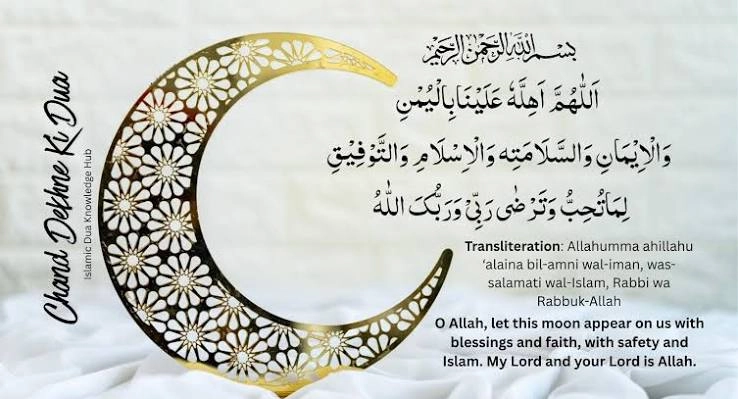
Read More : The Authentic New Month Dua (Arabic, Transliteration & Translation)
Why Surah Baqarah Is Called “The Peak of the Quran”
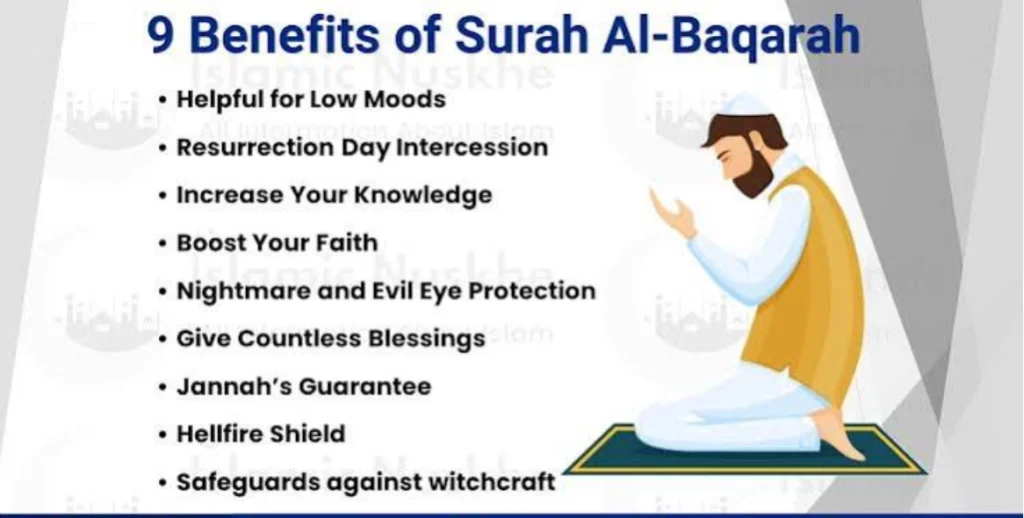
Prophet Muhammad (peace be upon him) placed special emphasis on the recitation of Surah Baqarah. It was narrated that the Messenger of Allah said, “Read the Quran, for it will come on the Day of Resurrection interceding for its companions. Read the two bright ones, Al-Baqarah and Surat Al ‘Imran, for they will come on the Day of Resurrection like two clouds or two shades, or two flocks of birds in ranks, pleading on behalf of their companions” (Sahih Muslim 804). This Hadith highlights how consistent recitation and reflection upon Surah Baqarah is regarded as a source of intercession in the Hereafter. It also explains why this Surah holds such a prominent place in the daily recitation habits of practicing Muslims across the UK, USA, and Canada, particularly during Taraweeh prayers in Ramadan.
Protection From Shaitan Through Surah Baqarah
Another authentic narration describes the protective quality of this Surah for one’s home. The Prophet (peace be upon him) said, “Do not turn your houses into graves. Verily, Shaitan flees from the house in which Surat Al-Baqarah is recited” (Sahih Muslim 780). This Hadith encourages believers to recite portions of the Surah regularly at home rather than treating recitation as something reserved only for the mosque. For families settled in Western countries, where daily routines can be busy, this teaching serves as a gentle reminder that even a portion of Surah Baqarah recited at home carries spiritual benefit and protection for the household.
The Last Two Ayat of Surah Baqarah (Verses 285-286)
The final two verses of Surah Al-Baqarah are widely recited due to their comprehensive message of faith, humility, and supplication. Below are both verses presented with Arabic text, transliteration, and English translation.
Verse 285:
آمَنَ الرَّسُولُ بِمَا أُنزِلَ إِلَيْهِ مِن رَّبِّهِ وَالْمُؤْمِنُونَ ۚ كُلٌّ آمَنَ بِاللَّهِ وَمَلَائِكَتِهِ وَكُتُبِهِ وَرُسُلِهِ لَا نُفَرِّقُ بَيْنَ أَحَدٍ مِّن رُّسُلِهِ ۚ وَقَالُوا سَمِعْنَا وَأَطَعْنَا ۖ غُفْرَانَكَ رَبَّنَا وَإِلَيْكَ الْمَصِيرُ
Transliteration: Aamanar-Rasoolu bimaa unzila ilayhi mir Rabbihi wal-mu’minoon, kullun aamana billaahi wa malaa’ikatihi wa kutubihi wa rusulih, laa nufarriqu bayna ahadim mir-rusulih, wa qaaloo sami’naa wa ata’naa ghufraanaka Rabbanaa wa ilaykal-maseer.
Translation: “The Messenger has believed in what was revealed to him from his Lord, and [so have] the believers. All of them have believed in Allah and His angels and His books and His messengers, [saying], ‘We make no distinction between any of His messengers.’ And they say, ‘We hear and we obey. [We seek] Your forgiveness, our Lord, and to You is the final destination.'”
Verse 286:
لَا يُكَلِّفُ اللَّهُ نَفْسًا إِلَّا وُسْعَهَا ۚ لَهَا مَا كَسَبَتْ وَعَلَيْهَا مَا اكْتَسَبَتْ ۗ رَبَّنَا لَا تُؤَاخِذْنَا إِن نَّسِينَا أَوْ أَخْطَأْنَا ۚ رَبَّنَا وَلَا تَحْمِلْ عَلَيْنَا إِصْرًا كَمَا حَمَلْتَهُ عَلَى الَّذِينَ مِن قَبْلِنَا ۚ رَبَّنَا وَلَا تُحَمِّلْنَا مَا لَا طَاقَةَ لَنَا بِهِ ۖ وَاعْفُ عَنَّا وَاغْفِرْ لَنَا وَارْحَمْنَا ۚ أَنتَ مَوْلَانَا فَانصُرْنَا عَلَى الْقَوْمِ الْكَافِرِينَ
Transliteration: Laa yukallifullaahu nafsan illaa wus’ahaa, lahaa maa kasabat wa ‘alayhaa mak-tasabat, Rabbanaa laa tu’aakhidhnaa in naseenaa aw akhta’naa, Rabbanaa wa laa tahmil ‘alaynaa isran kamaa hamaltahu ‘alal-ladheena min qablinaa, Rabbanaa wa laa tuhammilnaa maa laa taaqata lanaa bih, wa’fu ‘annaa waghfir lanaa warhamnaa, anta mawlaanaa fansurnaa ‘alal-qawmil kaafireen.
Translation: “Allah does not charge a soul except with that within its capacity. It will have the consequence of what good it has gained, and it will bear the consequence of what evil it has earned. ‘Our Lord, do not impose blame upon us if we have forgotten or erred. Our Lord, and lay not upon us a burden like that which You laid upon those before us. Our Lord, and burden us not with that which we have no ability to bear. And pardon us; and forgive us; and have mercy upon us. You are our protector, so give us victory over the disbelieving people.'”
Read More : How to Learn to Read Quran in English: A Complete Beginner’s Guide
The Virtue of Reciting the Last Two Ayat
These two verses are not only rich in meaning but also carry a specific promise mentioned in an authentic Hadith. The Prophet (peace be upon him) said, “Whoever recites the last two verses of Surat Al-Baqarah at night, it will be sufficient for him” (Sahih al-Bukhari 5009, also narrated in Sahih Muslim 808). Scholars have explained “sufficient” in different ways, including protection through the night, sufficiency in worship in place of extended night prayer, or safeguarding from harm. Because the authenticated wording is general, believers are encouraged to understand it as a source of comfort and protection rather than attaching overly specific promises not mentioned directly in the narration. This balance of honest, accurate reporting is important, especially for readers who may come across various interpretations online.
Making These Verses Part of Daily Life
For Muslims living in the UK, USA, and Canada, incorporating the last two ayat of Surah Baqarah into a nightly routine can be a simple yet meaningful habit, especially for beginners still building familiarity with Quranic recitation. Many choose to recite these verses after Isha prayer or just before sleeping, using translation apps or transliteration guides to strengthen understanding of the meaning alongside the Arabic recitation. Parents often use this practice to introduce children to the Quran in an approachable way, given the manageable length of just two verses. Since work and family schedules in Western countries can be demanding, this short yet powerful practice offers a practical entry point into consistent engagement with the Quran without requiring lengthy sessions.
Read More : theorbitequran.com
Frequently Asked Questions
1. What are the last two ayat of Surah Baqarah called? They do not have a distinct name; they are simply referred to as the final two verses (285-286) of Surah Al-Baqarah, and are sometimes called “Aamanar-Rasoolu” after their opening words.
2. Is it authentic that reciting the last two ayat protects a person at night? Yes, this is based on an authentic Hadith recorded in Sahih al-Bukhari (5009) and Sahih Muslim (808), though scholars differ slightly on the exact meaning of “sufficient.”
3. Can beginners recite just the last two ayat instead of the whole Surah? Yes, beginners can start with these two verses and gradually work toward reciting more of Surah Baqarah as their familiarity with the Quran grows.
4. Why is Surah Baqarah considered so important in Islam? It covers foundational Islamic teachings, includes Ayat-ul-Kursi, and carries specific Hadith describing its protective and interceding qualities, making it one of the most emphasized Surahs in Islamic tradition.
Disclaimer
This article is intended for general educational and informational purposes only. It does not constitute a religious verdict (fatwa) or formal Islamic ruling. For matters relating to personal worship, jurisprudence, or specific religious guidance, readers are encouraged to consult a qualified Islamic scholar. All Hadith references have been cited from recognized authentic collections; however, readers are welcome to verify these narrations independently through trusted Islamic sources.
Conclusion
Surah Al-Baqarah stands as one of the most comprehensive and spiritually significant chapters of the Quran, offering guidance on belief, worship, and daily conduct. Its final two verses, in particular, encapsulate the essence of faith, humility, and reliance on Allah, making them an accessible and meaningful starting point for anyone seeking to deepen their connection with the Quran. Supported by authentic Hadith, these verses hold both historical and spiritual weight, and their regular recitation continues to be a cherished practice among Muslims worldwide, including growing communities across the UK, USA, and Canada. May this guide serve as a helpful step toward greater understanding and consistent engagement with the words of the Quran.