Taraweeh is a confirmed Sunnah
Taraweeh is a confirmed Sunnah:
Twenty rak’ahs of Taraweeh every night of the holy month of Ramadan is a confirmed Sunnah, which has great virtue. It should be noted that Taraweeh is also proven from the Holy Prophet (peace and blessings of Allah be upon him), its being a Sunnah is also proven, and the fact that Taraweeh consists of twenty rak’ahs is also proven. Below are the evidences for these things in brief:
1️⃣ It was narrated from Abu Hurairah (may Allah be pleased with him) that the Holy Prophet (peace and blessings of Allah be upon him) said: “Whoever spends the nights of Ramadan in prayer out of faith and in the hope of reward, all his previous sins will be forgiven.”
Sahih Bukhari:
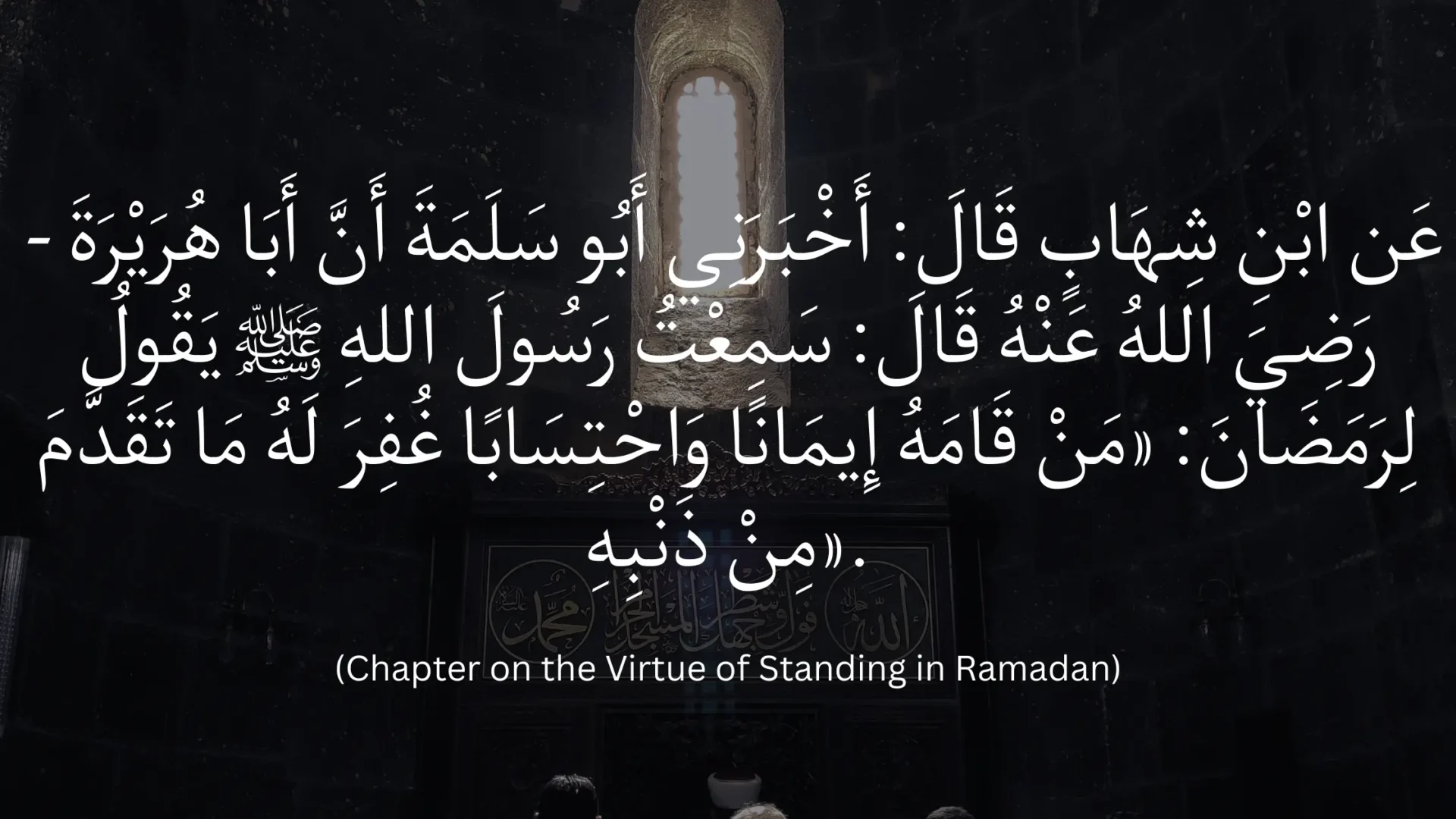
In this hadith, special encouragement has been given to worship at night during Ramadan, which is a clear proof of Taraweeh. Therefore, in some copies of “Sahih Al-Bukhari” there is a title “Kitab Salat Al-Taraweeh” and this hadith is mentioned under it. Similarly, Imam Nawawi, the commentator of “Sahih Muslim”, has also established a chapter and title on this hadith: “Chapter on Encouraging Standing in Ramadan and It is Taraweeh”, which is a statement of encouragement for standing in Ramadan, that is, Taraweeh. It is as if Imam Nawawi, may Allah have mercy on him, wants to say that standing in Ramadan in this hadith means Taraweeh. Also, other eminent narrators of the Ummah have also taken this hadith to mean Taraweeh.
2️⃣ Hazrat Amr bin Murrah (may Allah be pleased with him) says that a man came to the Holy Prophet (peace and blessings of Allah be upon him) and said, “If I testify to the Oneness of Allah and His Messengership, pray five times a day, pay Zakat, fast Ramadan, and stand in prayer during the nights of Ramadan, then who will I be among?” The Holy Prophet (peace and blessings of Allah be upon him) said, “Among the truthful and the martyrs.”
Sahih Ibn Hibban:
In this blessed hadith, the standing in prayer during the nights of Ramadan is mentioned separately.
3️⃣ Hazrat Numan bin Basheer (RA) says that we prayed with the Holy Prophet (PBUH) until the third night of Ramadan on the twenty-third night, then on the twenty-fifth night, we prayed until midnight, and then on the twenty-seventh night, we prayed until the last hour of the night, until we began to fear that the time for Suhoor would end.
Righteous Ruler:
After mentioning this hadith, Imam Hakim (may Allah have mercy on him) said: This hadith is authentic and in accordance with the conditions of Imam Bukhari. And it contains clear evidence that Taraweeh prayers performed in mosques are a Sunnah.
This hadith is authentic on the conditions of Al-Bukhari and he did not mention it, and it contains clear evidence that Taraweeh prayers in Muslim mosques are an established Sunnah, and Ali ibn Abi Talib was urging Umar (may Allah be pleased with him) to establish this Sunnah until he established it. (Kitab Al-Sawm)
This hadith and the explanation of a great Imam regarding it are also clear evidence of Taraweeh prayers.
4️⃣ The Holy Prophet (ﷺ) said: “Allah has made fasting in Ramadan obligatory upon you, and I have made it Sunnah for you to stand in prayer during the nights of Ramadan. So whoever fasts in Ramadan and stands in prayer during the nights of Ramadan, he is as pure from sins as he was on the day his mother gave birth to him.”
Sunan an-Nasa’i:
This hadith is also a clear proof of the Taraweeh prayer, because it specifically states that praying in Ramadan is a Sunnah. The scholars of the Ummah have also argued for the Sunnah of Taraweeh from this hadith.
5️⃣ Hazrat Abdullah bin Abbas (may Allah be pleased with him) says that the Holy Prophet (peace and blessings of Allah be upon him) used to pray twenty rak’ahs (Taraweeh) and Witr prayer in the month of Ramadan. This hadith is found in the following books of hadith:
Musannaf Ibn Abi Shaybah:
From Al-Tabarani’s Al-Awsat Dictionary:
Author Ibn Abi Shaiba:
حَدَّثَنَا يَزِيدُ بْنُ هَارُونَ قَالَ: أَخْبَرَنَا إبْرَاهِيمُ بْنُ عُثْمَانَ عَنِ الْحَكَمِ، عَنْ مِقْسَمٍ، عَنِ ابْنِ عَبَّاسٍ: أَنَّ رَسُولَ اللهِ ﷺ كَانَ يُصَلِّي فِي رَمَضَانَ عِشْرِينَ رَكْعَةً وَالْوِتْرَ
السنن الکبریٰ للبیہقی:
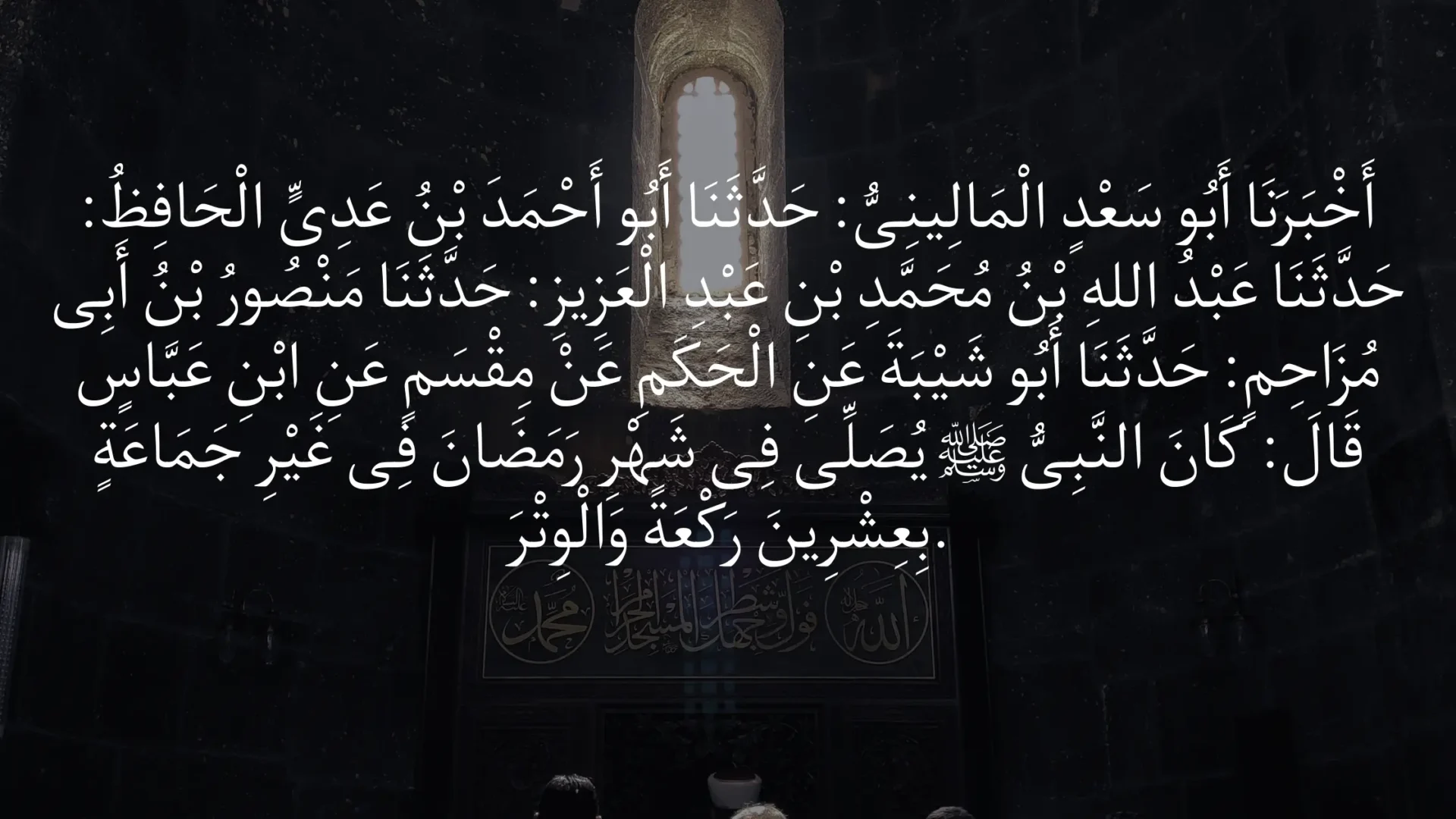
4799- أَخْبَرَنَا أَبُو سَعْدٍ الْمَالِينِىُّ: حَدَّثَنَا أَبُو أَحْمَدَ بْنُ عَدِىٍّ الْحَافِظُ: حَدَّثَنَا عَبْدُ اللهِ بْنُ مُحَمَّدِ بْنِ عَبْدِ الْعَزِيزِ: حَدَّثَنَا مَنْصُورُ بْنُ أَبِى مُزَاحِمٍ: حَدَّثَنَا أَبُو شَيْبَةَ عَنِ الْحَكَمِ عَنْ مِقْسَمٍ عَنِ ابْنِ عَبَّاسٍ قَالَ: كَانَ النَّبِىُّ ﷺ يُصَلِّى فِى شَهْرِ رَمَضَانَ فِى غَيْرِ جَمَاعَةٍ بِعِشْرِينَ رَكْعَةً وَالْوِتْرَ.
☀️ المعجم الاوسط للطبرانی:
798- حدثنا أحمد بن يحيى الحلواني قال: حدثنا علي بن الجعد قال: حدثنا أبو شيبة إبراهيم بن
عثمان عن الحكم بن عتيبة عن مقسم عن بن عباس: أن النبي ﷺ كان يصلي في رمضان عشرين ركعة سوى الوتر.
☀️ المعجم الکبیر:
12102- حدثنا محمد بن جعفر الرازي ثنا علي بن الجعد ثنا أبو شيبة إبراهيم بن عثمان عن الحكم عن مقسم عن ابن عباس قال: كان النبي ﷺ يصلي في رمضان عشرين ركعة والوتر.
☀️ مسند عبد بن حمید:
653- حدثني أبو نعيم قال: حدثني أبو شيبة عن الحكم عن مقسم عن ابن عباس قال: كان رسول الله ﷺ يصلي في رمضان عشرين ركعة ويوتر بثلاث.
☀️ جزء من حديث أبي الحسن محمد بن طلحة النعالي:
33- حدثنا أبو حفص عمر بن أحمد بن محمد بن حمة الخلال: حدثنا حامد بن محمد البلخي: حدثنا منصور بن أبي مزاحم: حدثنا شيبة عن الحكم عن مقسم عن ابن عباس قال: كان رسول الله ﷺ يصلي في شهر رمضان عشرين ركعة والوتر .
Sunan Al-Kabra by Bayhaqi:
More Read : https://theorbitquran.com
Hazrat Jabir (RA) narrates that the Holy Prophet (PBUH) came one night in Ramadan and led the Companions in twenty-four rak’ahs (i.e. four obligatory and twenty Taraweeh prayers) and three rak’ahs of Witr.
Date of Jurjan:
أبو الحسن علي بن محمد بن أحمد بن عبد الله الفقيه الشافعي الزاهد جرجاني كان يعرف بأبي الحسن القصري ينزل بباب الخندق وتوفي في الجامع يوم الجمعة عند المحراب العتيق بعد الصلاة يوم عاشوراء سنة ثمان وستين وثلاثمائة روى عن عبد الرحمن بن عبد المؤمن وعاصم بن سعيد وأحمد بن عبد الكريم والبغوي وابن صاعد وابن أبي داود وغيرهم: حدثنا أبو الحسن علي بن محمد بن أحمد القصري الشيخ الصالح رحمه الله: حدثنا عبد الرحمن بن عبد المؤمن العبد الصالح قال: أخبرني محمد بن حميد الرازي: حدثنا عمر بن هارون: حدثنا إبراهيم بن الحناز عن عبد الرحمن عن عبد الملك بن عتيك عن جابر بن عبد الله قال: خرج النبي ﷺ ذات ليلة في رمضان فصلى الناس أربعة وعشرين ركعة وأوتر بثلاثة.
In order to avoid length, the usual mention of the Companions of the Prophet (may Allah be pleased with them) regarding Taraweeh is being avoided.
The chain of transmission of the narrations of twenty rak’ahs of Taraweeh:
The hadiths mentioned in the previous section regarding twenty rak’ahs of Taraweeh are reliable and acceptable for the following reasons:
1️⃣ All the narrators of these hadiths are reliable and trustworthy, and the narrators on whom the narration is based are also reliable narrators. For details, see: A’la’ al-Sunan.
2️⃣ These hadiths have been accepted, that is, the ummah has accepted them and the action of the ummah has been in accordance with them, even the action of the four Imams and Mujtahids has been based on these hadiths. And one of the reliable principles of hadith is that when a hadith has been accepted and the action of the ummah has been in accordance with it, it is considered authentic, even if it is weak in terms of chain of transmission, rather, its chain of transmission is not disputed due to the frequency of practice. See “Tadrib al-Rawi” and other books on the principles of hadith. It is possible that a hadith may be weak in terms of chain of transmission, but due to the acceptance and frequent practice of the Ummah, that hadith is considered reliable and acceptable, as those familiar with “Jami’ al-Tirmidhi” know that Imam Tirmidhi (may Allah have mercy on him) ruled that many hadiths were weak, but he also said:
وَالْعَمَلُ عَلَى هَذَا عِنْدَ أَكْثَرِ أَهْلِ الْعِلْمِ مِنْ أَصْحَابِ النَّبِيِّ ﷺ وَمَنْ بَعْدَهُمْ.
” or
وَالعَمَلُ عَلَى هَذَا عِنْدَ أَكْثَرِ أَهْلِ العِلْمِ
which means that although this hadith is weak, the action of most of the people of knowledge among the companions and those after him is based on it. This is what is meant by praising this hadith. This also corrects the mistake of those who make the chain of transmission of the hadith sound or weak or reliable or not entirely dependent on it.
3️⃣ These hadiths are also supported by the actions of the Rightly Guided Caliphs and other Companions (may Allah be pleased with them) who also performed twenty rak’ahs of Taraweeh.
Taraweeh is a confirmed Sunnah:
From the previous description, it is clear that Taraweeh is proven from the Holy Prophet (peace and blessings of Allah be upon him), is an important act of religion, has great virtue, and it is also proven that twenty rak’ahs of Taraweeh are proven from the Holy Prophet (peace and blessings of Allah be upon him). As far as the question is concerned, what is the Sharia ruling on Taraweeh? It should be noted that this is a confirmed Sunnah, for the following reasons:
1️⃣ Earlier, in Hadith No. 4, this hadith of “Sunan An-Nasa’i” was mentioned that the Holy Prophet (peace and blessings of Allah be upon him) said: “Allah Almighty has made fasting in Ramadan obligatory upon you, while I have made standing in the nights of Ramadan a Sunnah for you.” In this hadith, the Holy Prophet (peace and blessings of Allah be upon him) is declaring Taraweeh as a Sunnah, and when Sunnah is mentioned with such care and clarity, it does not mean something that is not confirmed, but something that is confirmed.
2️⃣ For a Sunnah to be a confirmed Sunnah, it is sufficient that the Holy Prophet (ﷺ) has made it permanent, and Taraweeh is also legally permanent and permanent. Accordingly, in the previous Hadith No. 3, the Hadith of “Mustadrak al-Hakim” has been mentioned, which states: “Hazrat Nu’man bin Bashir (may Allah be pleased with him) said: We prayed with the Holy Prophet (ﷺ) until the third part of the night on the twenty-third night of Ramadan, then we prayed until midnight on the twenty-fifth night, then we prayed until the last part of the night on the twenty-seventh night, until we began to fear that the time for Suhoor would be over.” Also, the Hadith of “Sahih Muslim” further explains that when the Holy Prophet (ﷺ) came to the mosque for three nights and led the prayer, the number and enthusiasm of the companions increased every night. Then on the fourth night, the companions waited, but the Holy Prophet (ﷺ) did not come to the mosque. Then after the Fajr prayer, he said: “I did not come to tell you to do something.” “This prayer should not become obligatory.”
حَدَّثَنِى حَرْمَلَةُ بْنُ يَحْيَى: أَخْبَرَنَا عَبْدُ اللهِ بْنُ وَهْبٍ: أَخْبَرَنِى يُونُسُ بْنُ يَزِيدَ عَنِ ابْنِ شِهَابٍ قَالَ: أَخْبَرَنِى عُرْوَةُ بْنُ الزُّبَيْرِ أَنَّ عَائِشَةَ أَخْبَرَتْهُ أَنَّ رَسُولَ اللهِ ﷺ خَرَجَ مِنْ جَوْفِ اللَّيْلِ فَصَلَّى فِى الْمَسْجِدِ فَصَلَّى رِجَالٌ بِصَلاَتِهِ فَأَصْبَحَ النَّاسُ يَتَحَدَّثُونَ بِذَلِكَ فَاجْتَمَعَ أَكْثَرُ مِنْهُمْ فَخَرَجَ رَسُولُ اللهِ ﷺ فِى اللَّيْلَةِ الثَّانِيَةِ فَصَلَّوْا بِصَلَاتِهِ فَأَصْبَحَ النَّاسُ يَذْكُرُونَ ذَلِكَ فَكَثُرَ أَهْلُ الْمَسْجِدِ مِنَ اللَّيْلَةِ الثَّالِثَةِ فَخَرَجَ فَصَلَّوْا بِصَلَاتِهِ فَلَمَّا كَانَتِ اللَّيْلَةُ الرَّابِعَةُ عَجَزَ الْمَسْجِدُ عَنْ أَهْلِهِ فَلَمْ يَخْرُجْ إِلَيْهِمْ رَسُولُ اللهِ ﷺ فَطَفِقَ رِجَالٌ مِنْهُمْ يَقُولُونَ: الصَّلَاةَ. فَلَمْ يَخْرُجْ إِلَيْهِمْ رَسُولُ اللهِ ﷺ حَتَّى خَرَجَ لِصَلاةِ الْفَجْرِ فَلَمَّا قَضَى الْفَجْرَ أَقْبَلَ عَلَى النَّاسِ ثُمَّ تَشَهَّدَ فَقَالَ: «أَمَّا بَعْدُ فَإِنَّهُ لَمْ يَخْفَ عَلَىَّ شَأْنُكُمُ اللَّيْلَةَ وَلَكِنِّى خَشِيتُ أَنْ تُفْرَضَ عَلَيْكُمْ صَلَاةُ اللَّيْلِ فَتَعْجِزُوا عَنْهَا.
(باب التَّرْغِيبِ فِى قِيَامِ رَمَضَانَ وَهُوَ التَّرَاوِيحُ)
(Chapter on Encouraging the Prayer of Ramadan and Taraweeh)
After leading Taraweeh for three nights, the Holy Prophet (peace and blessings of Allah be upon him) did not come to the mosque and gave the excuse that it might not become obligatory upon him, as a sign of compassion for the Ummah. It is as if this excuse had become an obstacle to coming to the mosque, otherwise the Holy Prophet (peace and blessings of Allah be upon him) would have come to the mosque even after that. This proves that Taraweeh is obligatory in terms of law. Later, during the reign of the Rightly Guided Caliphs and other Companions (may Allah be pleased with them), since this excuse and possibility of Taraweeh becoming obligatory did not exist, they gathered everyone in the mosque under a single Imam for Taraweeh prayers, and Taraweeh began to be offered in congregation every night of Ramadan. This shows that the permanence and continuity of Taraweeh is established from the Holy Prophet (peace and blessings of Allah be upon him), although it was in terms of rulings that if it were not for this excuse for Taraweeh to be obligatory on the Ummah, he would have performed it in reality. The Rightly Guided Caliphs and other Companions also performed Taraweeh in permanence. This whole situation is evidence of Taraweeh being a confirmed Sunnah. This is what many scholars of the Ummah have mentioned, as the famous researcher Allama Abdul Hayy Lucknowi (may Allah have mercy on him) wrote in “Al-Ta’liq Al-Mumjad”:
His saying:
«فلم يمنعني … إلخ» ظاهره أنه كان يحب أن يصلي بالناس في ليالي رمضان على الدوام، ولم يمنعه إلا خشية أن يُفرض عليهم، فاستُفيدت منه المواظبة الحُكمية وإن لم توجد المواظبة الحقيقية، ومدار السنية المواظبة مطلقا فيكون قيام رمضان سنَّة مؤكدة. وعليه جمهور أصحابنا وجمهور العلماء. وأما ما نقله بعض أصحابنا أن التراويح مستحب فهو مخالف للدراية والرواية
(Chapter 10: Standing in the month of Ramadan and what is in it of virtue)
3️⃣ One of the reasons for Taraweeh being a confirmed Sunnah is that the entire Muslim Ummah, including the Companions, the Tabi’een and the Tabi’een, used to perform Taraweeh, and that too with full enthusiasm and enthusiasm and collectively, which is an argument for emphasizing this practice, because such an extraordinary practice and arrangement is not done for a non-confirmed Sunnah.
4️⃣ With the exception of brevity, below are the statements of a few jurists of the Ummah who have declared Taraweeh as Sunnah Muqadah:
The famous researcher Allama Abd al-Hay Lakhnavi, may God have mercy on him, writes in “Al-Taliq al-Mumjad”:
His saying: ”
«فلم يمنعني … إلخ» ظاهره أنه كان يحب أن يصلي بالناس في ليالي رمضان على الدوام، ولم يمنعه إلا خشية أن يُفرض عليهم، فاستُفيدت منه المواظبة الحُكمية وإن لم توجد المواظبة الحقيقية، ومدار السنية المواظبة مطلقا فيكون قيام رمضان سنَّة مؤكدة. وعليه جمهور أصحابنا وجمهور العلماء. وأما ما نقله بعض أصحابنا أن التراويح مستحب فهو مخالف للدراية والرواية.
(Chapter on the establishment of the city of Ramadan and what is in it of virtue)
Imam Abdullah bin Mahmood Mosuli (may God have mercy on him) writes in “Al-Akhtiar Latalil Al-Mukhtar”:
(التراويح سنة مؤكدة)؛ لأن النبي ﷺ أقامها في بعض الليالي، وبيّن العذر في ترك المواظبة وهو خشية أن تكتب علينا وواظب عليها الخلفاء الراشدون وجميع المسلمين من زمن عمر بن الخطاب إلى يومنا هذا.
Imam Ibn Qudama Hanbali, may God have mercy on him, writes in “Sharh al-Kabeer Ali Matan al-Muqnaq”:
(مسألة) (ثم التراويح وهي عشرون ركعة يقوم بها في رمضان في جماعة ويوتر بعدها في الجماعة) التراويح سنة مؤكدة سنها رسول الله ﷺَ قال أبو هريرة: كان رسول الله ﷺ يرغب في قيام رمضان من غير أن يأمرهم فيه بعزيمة فيقول: «من قام رمضان إيمانا واحتسابا غفر له ما تقدم من ذنبه».
Imam Taqi al-Din Sabki Shafi’i, may God have mercy on him, quotes the sayings of several scholars of the Ummah in Fatawi al-Sabki:
وَبَعْدُ فَهَذَا مُخْتَصَرٌ يُسَمَّى بِإِشْرَاقِ الْمَصَابِيحِ فِي صَلَاةِ التَّرَاوِيحِ مُرَتَّبٌ عَلَى ثَلَاثَةِ فُصُولٍ (الْأَوَّلُ) فِيمَا نُقِلَ عَن الْعُلَمَاءِ رَضِيَ اللهُ عَنْهُمْ فِيهَا: أَمَّا الشَّافِعِيَّةُ فَقَالَ الشَّافِعِيُّ رَضِيَ اللهُ عَنْهُ فِي «مُخْتَصَرِ الْبُوَيْطِيِّ»: الْوَتْرُ سُنَّةٌ وَرَكْعَتَا الْفَجْرِ سُنَّةٌ وَالْعِيدَانِ وَالِاسْتِسْقَاءُ وَالْكُسُوفُ سُنَّةٌ مُؤَكَّدَةٌ وَقَدْ رُوِيَ أَنَّ رَسُولَ اللهِ ﷺ كَانَ يُصَلِّي رَكْعَتَيْنِ بَعْدَ الظُّهْرِ وَرَكْعَتَيْنِ بَعْدَ الْمَغْرِبِ وَرَكْعَتَيْنِ بَعْدَ الْعِشَاءِ. قَالَ: وَالْكُسُوفُ وَالِاسْتِسْقَاءُ وَالْعِيدَانِ أَوْكَدُ، وَقِيَامُ رَمَضَانَ فِي مَعْنَاهَا فِي التَّأْكِيدِ. وَقَالَ أَبُو عَلِيٍّ الطَّبَرِيُّ فِي «الْإِيضَاحِ»: قِيَامُ رَمَضَانَ سُنَّةٌ مُؤَكَّدَةٌ. وَقَالَ الْبَنْدَنِيجِيُّ فِي «الذَّخِيرَةِ»: أَمَّا قِيَامُ رَمَضَانَ فَهُوَ سُنَّةٌ مُؤَكَّدَةٌ. وَقَالَ الْغَزَالِيُّ فِي «الْإِحْيَاءِ»: سُنَّةٌ مُؤَكَّدَةٌ وَإِنْ كَانَتْ دُونَ الْعِيدَيْنِ. وَقَالَ الْحَلِيمِيُّ: دَلَّتْ صَلَاتُهُ يَعْنِي النَّبِيَّ ﷺ بِهِمْ جَمَاعَةً عَلَى أَنَّ الْقِيَامَ فِي شَهْرِ رَمَضَانَ يَتَأَكَّدُ حَتَّى يُدَانِيَ الْفَرَائِضَ. وَقَالَ ابْنُ التِّلِمْسَانِيِّ فِي «شَرْحِ التَّنْبِيهِ»: قِيَامُ رَمَضَانَ سُنَّةٌ مُؤَكَّدَةٌ. وَفِي «نِهَايَةِ الِاخْتِصَارِ» الْمَنْسُوبِ إلَى النَّوَوِيِّ رَحِمَهُ اللهُ: وَيُؤَكِّدُ الضُّحَى وَالتَّهَجُّدَ وَالتَّرَاوِيحَ
▪️ In summary, the Sunnah of Taraweeh is proven by the sayings of the Holy Prophet ﷺ, it is also proven by the actions of the Prophet ﷺ, the rightful caliphs, other companions, the Tabieen, the followers of the Tabieen and the Muslim Ummah.